The intersection of viticulture and refined hospitality represents a sophisticated niche within the American travel landscape. At its zenith, this category transcends the conventional definitions of lodging, demanding a delicate equilibrium between the operational volatility of an agricultural estate and the exacting service standards of elite tourism. A truly distinguished property does not merely provide a vista of rolling hills; it offers an immersive connection to the soil, the cellar, and the specific rhythm of the vine.
For the discerning traveler, identifying a property that earns its place among the top-tier establishments requires a departure from surface-level marketing. One must learn to discern between “winery-adjacent” hotels, which utilize the aesthetic of the grape to enhance their surroundings, and integrated estates where viticulture serves as the primary engine of the guest experience.
Understanding “luxury vineyard resort hotels usa”
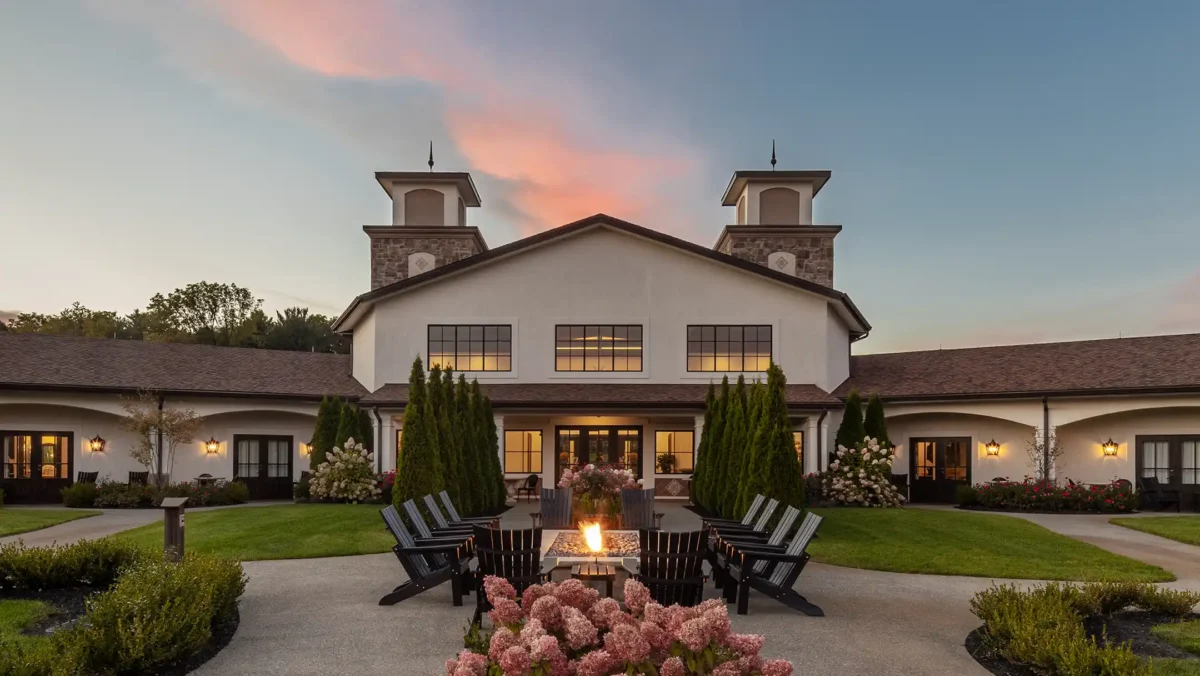
The term “luxury vineyard resort hotels usa” often suffers from indiscriminate application in the digital marketplace. Prospective guests frequently encounter properties that claim the “vineyard” title despite having no proprietary agricultural footprint or production capability. A rigorous definition of this category must prioritize “integrated viticulture.” This implies that the resort and the vineyard share a symbiotic operational structure, where the cultivation, harvesting, and vinification processes directly inform the resort’s programming, culinary offerings, and wellness initiatives.
One common misunderstanding involves the perceived correlation between room density and exclusivity. Many travelers erroneously assume that a larger, more amenity-rich property provides a higher standard of luxury. In practice, the most authoritative estates are often smaller, high-touch environments where the ratio of land to guest is intentionally skewed toward the landscape. When evaluating these properties, a lack of deep integration—where the winery and the hotel operate as siloed business units—often signals a marketing-first approach rather than an experience-first reality. Discerning the difference requires an analysis of how the resort curates access to the production cycle, whether through private cellar tours, educational programming with estate winemakers, or seasonal harvest activities that invite guest participation.
Deep Contextual Background: The Evolution of Wine Tourism
The American landscape of wine-based hospitality underwent a profound systemic shift following the mid-20th-century renaissance of domestic viticulture. Initially, the American industry struggled to move beyond the shadow of imported European benchmarks. However, the subsequent decades witnessed a rapid professionalization of the estate model, driven by technological experimentation and a focus on site-specific “terroir.”
As the prestige of domestic regions like Napa Valley, the Willamette Valley, and the emerging districts of Virginia solidified, the physical infrastructure of the vineyard evolved. No longer just a place of production, the estate transformed into a hospitality destination designed to reflect regional identity. The 1976 “Judgment of Paris” acted as a critical inflection point, legitimizing American wine on the global stage and catalyzing the development of the sophisticated hospitality infrastructure observed today. Modern properties now navigate a landscape where they must balance this legacy with the increasing demand for sustainable, farm-to-table luxury, ensuring that the agricultural integrity of the estate remains the foundation of its commercial success.
Conceptual Frameworks and Mental Models
To evaluate potential destinations with professional rigor, one should employ the following analytical lenses:
-
The Estate Integration Index: This framework measures the conceptual distance between the vineyard’s production cycle and the guest’s daily experience. High-scoring properties provide guests with meaningful, non-superficial access to the winemaking process.
-
Service-Agriculture Equilibrium: Hospitality inherently favors stability and predictability, whereas agriculture remains volatile and weather-dependent. A superior estate successfully buffers the guest from the “unpleasant” realities of farming (e.g., equipment noise, irrigation maintenance) without insulating them from the reality of the vineyard.
-
Terroir-Hospitality Mapping: This model assesses how effectively the resort translates the physical characteristics of its soil and climate into the guest experience. This is evidenced not just by the wine list, but by the architectural materials, the landscape design, and the local sourcing of the culinary program.
Categorization and Operational Trade-offs
| Category | Primary Offering | Typical Trade-off |
| Legacy Estates | Historic architecture, deep pedigree | Often constrained by older site layouts |
| Boutique Farm-to-Bottle | High intimacy, direct maker access | Limited service hours and smaller amenity menus |
| Grand Luxury Resorts | Full-scale spa, golf, white-glove service | Higher guest density; less “vineyard immersion” |
| Private Estate Rentals | Absolute privacy, custom programming | Lack of professional, full-time hospitality staff |
The decision logic here relies on identifying the “friction point” of the stay. If the objective is deep education in viticulture, the Boutique Farm-to-Bottle estate represents the superior selection. Conversely, if the objective is a comprehensive, low-friction vacation that happens to occur in a vineyard setting, the Grand Luxury Resort offers the requisite stability.
Detailed Real-World Scenarios
-
The Seasonal Incongruity: A traveler visits a high-end estate during the peak of “crush” (harvest). The resort is inherently noisier, and staff are diverted toward production. Failure occurs when the guest’s expectations of quiet relaxation clash with the reality of an active agricultural cycle. Success requires a property that successfully compartmentalizes the labor of production from the repose of the guest experience.
-
The Connectivity Dilemma: Many premium estates sit in rugged, high-altitude, or remote terrain to maximize grape quality. This often results in limited digital infrastructure. A property that fails to provide robust, localized connectivity (for those requiring it) compromises its “luxury” status in the modern professional context.
-
The “View vs. Vibe” Conflict: A traveler may choose a property for its photographic appeal, only to find it situated near a high-traffic regional arterial road. An estate that lacks a physical acoustic buffer fails to provide the true tranquility expected of a top-tier retreat.
Planning, Cost, and Resource Dynamics
Economic variability in this sector is driven by the scarcity of prime agricultural land suited for high-end hospitality. Costs should be viewed as a reflection of “operational complexity” rather than just a room rate.
-
Direct Costs: Room rates at top-tier estates often incorporate a “scarcity premium” due to low unit counts.
-
Indirect Costs: Many properties require a significant investment in time and private transport, as they are intentionally located away from major metropolitan hubs to protect the vineyard’s environment.
-
Cost Dynamics Table:
-
Baseline (Boutique/Seasonal): $500–$800/night
-
Estate-Integrative (Luxury/Year-round): $900–$2,000/night
-
Ultra-Exclusive (Estate Buyout): $3,000+/night
-
Risk Landscape and Failure Modes
The primary failure mode in the luxury vineyard space is the “dilution of focus.” When an estate’s leadership shifts priority from the quality of the vintage to the volume of the occupancy rate, the property’s prestige often collapses. Furthermore, environmental risks—such as changing microclimates and water scarcity—can rapidly degrade the resort’s atmosphere, transforming a verdant landscape into a neglected or resource-strained site within a single season.
Governance, Maintenance, and Long-Term Adaptation
Look for properties that maintain long-term relationships with their viticulturists, even during changes in hotel management. A resort that treats its vines as a temporary asset for marketing purposes will rarely provide the long-term authority a discerning traveler expects. Effective governance involves regular review cycles of both the wine production facilities and the guest experience to ensure neither area atrophies at the expense of the other.
Measurement, Tracking, and Evaluation
-
Leading Indicators: High turnover in viticultural staff often predicts a future decline in hospitality quality.
-
Qualitative Signals: Does the service staff speak about the “land” or the “business”? Staff that deeply understands the estate’s unique terroir typically provide a more sophisticated level of service.
-
Documentation Example: Maintain a “Terroir Log” during your stay, tracking not just the amenities, but the specific educational access you had to the winemaking process and how the estate balances its agricultural and hospitality duties.
Common Misconceptions and Oversimplifications
-
Myth: “All vineyard properties provide a luxury experience.” Correction: Most vineyard estates are primarily agricultural. Only a small fraction possess the infrastructure for true, 24-hour luxury hospitality.
-
Myth: “Vineyard resorts are best in the autumn.” Correction: The “best” season depends on the desired educational outcome; spring offers insight into bud break and pruning, while summer highlights the growing cycle.
-
Myth: “Larger resorts offer better service.” Correction: In the vineyard sector, size is often an enemy of intimacy. The most profound, authentic experiences are typically found at properties with fewer than 50 guest units.
Conclusion
The search for the best luxury vineyard resort hotels usa is, in essence, a search for a coherent narrative—a location where land, labor, and leisure are not separate components, but an integrated whole. The most exceptional estates in the United States are those that respect the temporal, unpredictable nature of the vine while maintaining a consistent, elegant framework for human restoration. Success in this market is found not by identifying the most visible property, but by prioritizing those that demonstrate long-term ecological and operational integrity. True value in these retreats lies in their ability to offer a window into the rhythms of the earth, delivered with the quiet, exacting standards of modern hospitality.