The selection of a venue for high-stakes corporate gatherings is a logistical undertaking that transcends the typical criteria of aesthetic appeal and location. When an organization moves to consolidate leadership teams, facilitate complex strategic planning, or reward high-performing units within a resort setting, the physical environment becomes an active participant in the success of the initiative. A resort is not a static backdrop; it is a high-density, high-intensity operational environment where the integration of professional requirements with leisure-focused infrastructure often creates significant friction.
The complexity lies in the duality of the objective. The venue must provide the technical capabilities of a major conference center—bandwidth density, acoustic isolation, and ergonomic support—while maintaining the restorative, frictionless atmosphere that justifies the choice of a resort in the first place. Achieving this equilibrium is the defining challenge for any planner tasked with securing a facility for executive engagement. This article provides a comprehensive, analytical framework for vetting properties, moving beyond the superficiality of glossy brochures to examine the systemic operational integrity required for professional success.
Understanding “best resort hotels for corporate hosting”
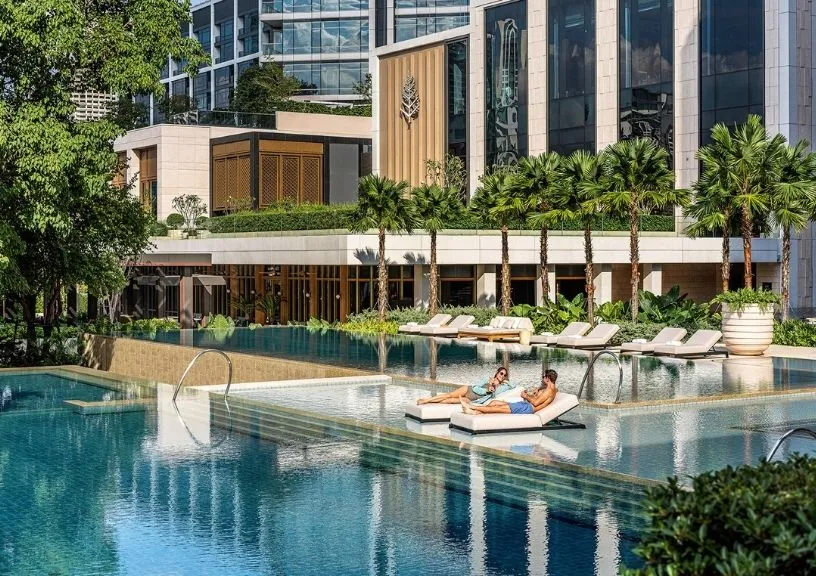
The definition of the best resort hotels for corporate hosting is inherently fluid, shifting based on the intensity and technical requirements of the event. A common failure in venue selection is the reliance on “brand reputation” as a surrogate for actual operational capability. A property may be globally recognized for its leisure excellence while remaining fundamentally ill-equipped to support a seamless, multi-day technical conference or a sensitive leadership retreat. Identifying the ideal venue requires a shift in perspective from the “guest” experience to the “operational” experience.
Oversimplification frequently occurs when planners prioritize the breadth of the resort’s amenity list—the number of pools, the variety of dining outlets, or the range of recreational activities—at the expense of the property’s back-of-house infrastructure. For corporate objectives, a high-quality, dedicated, and responsive event team is significantly more valuable than an additional golf course. When one attempts to identify the best resort hotels for corporate hosting, the primary metric must be the consistency of support services, the robustness of the digital backbone, and the property’s proven capacity to maintain professional focus in an environment built for distraction.
Deep Contextual Background: The Evolution of Professional Gatherings
The modern corporate retreat has evolved significantly from the rigid, board-room-dominated structures of the late 20th century. As the workforce has become more distributed and the nature of work has moved toward collaborative, project-based models, the requirements for physical meeting spaces have shifted as well. Organizations no longer seek static facilities; they require dynamic, flexible ecosystems that can transition from high-intensity breakout sessions to collaborative social functions without logistical lag.
This evolution has forced resorts to adapt their physical footprints. Properties that were once designed solely for seasonal vacation traffic have been retrofitted to include professional-grade connectivity, sound-dampened modular spaces, and dedicated corporate concierge teams. This shift has not been uniform, however. Many established resorts still struggle to reconcile their leisure-first architectural design with the functional requirements of professional teams, creating a market where the gap between the “advertised” and the “functional” is often vast.
Conceptual Frameworks and Mental Models
To vet potential venues with the necessary professional rigor, apply these frameworks:
-
The Digital Continuity Index: Beyond standard Wi-Fi, this measures the resilience of the network under the load of high-density usage (e.g., streaming, simultaneous presentations, cloud-based collaboration). Does the venue provide dedicated, non-public bandwidth?
-
The Operational Elasticity Model: Evaluate how the property scales its staffing for events. Is there a dedicated team that remains on-site through the duration of the event, or is support handled by rotating, general-assignment staff?
-
The Environmental Distraction Quotient: Assess the site’s physical design. Are meeting spaces integrated into the high-traffic leisure zones (e.g., poolside, near main lobbies), or are they sequestered to ensure privacy and focus?
Categorization and Operational Trade-offs
| Property Category | Infrastructure Focus | Primary Limitation |
| Integrated Business-Resorts | Technical stability, high capacity | Lower aesthetic/leisure “escapism” |
| Boutique Estate Buyouts | Absolute privacy, high customization | Restricted scalability, cost intensity |
| Urban-Periphery Resorts | Rapid logistics, tech-ready | Potential for city-bound ambient noise |
| Remote Nature Lodges | Deep focus, community building | Technical fragility, extreme logistics |
The decision logic should follow the “Work-Life Priority” rule. If the professional objective is the primary driver, one must prioritize properties that function as professional-first operations, even if it results in a slight dilution of the “resort” feel.
Detailed Real-World Scenarios
-
The Bandwidth Bottleneck: A team requires real-time simulation during a workshop. The property’s public network lags, disrupting the simulation. The failure mode here is a lack of “Infrastructure Vetting.” The most resilient approach is to contract for a dedicated, password-protected VLAN with guaranteed throughput.
-
The Acoustic Leakage Conflict: A sensitive leadership session is scheduled in a hall adjacent to a high-volume leisure area. Constant audio interference forces a mid-event relocation. A successful planner identifies the “acoustic signature” of the venue long before contracts are signed.
-
The Service-Level Degradation: During peak season, the event team is diverted to general hospitality duties, leaving the conference room under-supported. The remedy is a “Service-Continuity Clause” that guarantees a dedicated staff-to-attendee ratio for the duration of the event.
Planning, Cost, and Resource Dynamics
The economic management of corporate hosting requires a granular breakdown of costs.
-
Direct Costs: Facility fees, per-head catering, technical support, and auxiliary labor.
-
Indirect Costs: The “productivity tax” of poor logistical flow or network latency, which degrades the outcome of the sessions themselves.
-
Variable Cost Ranges:
-
Baseline (Standard Conference/Group): $400–$800/attendee/day.
-
Mid-Tier (Executive Retreat/Bespoke): $1,000–$2,500/attendee/day.
-
Premium (Estate Buyout/High-Tech Focus): $3,500+/attendee/day.
-
Risk Landscape and Failure Modes
The primary systemic risk is “Normalization of Sub-optimal Performance.” Organizations often accept lower-quality service because they are already onsite and committed. Compounding this is the “Information Asymmetry” between the resort sales team—whose goal is to close the contract—and the resort operations team, who must actually deliver the service. Robust planning requires an independent verification of the property’s operational capacity, often through an on-site reconnaissance visit by the lead project manager.
Governance, Maintenance, and Long-Term Adaptation
To manage high-stakes hosting, treat the event as a critical project with clear governance. Before the event, conduct a “technical stress test” with the property’s head of IT. During the event, establish a formal “review cadence” where the event manager meets with the venue lead twice daily to address emerging issues before they reach a failure threshold. This creates a feedback loop that forces the resort’s team to maintain a high level of accountability.
Measurement, Tracking, and Evaluation
-
Leading Indicators: The quality of the “Technical Specifications Document” provided by the resort. A detailed, proactive document indicates a high level of professional experience.
-
Qualitative Signals: The property’s willingness to grant direct access to their operations head, rather than forcing all communication through a sales coordinator.
-
Documentation Example: Maintain a “Technical Performance Log” throughout the event. Record downtime, staff responsiveness times, and any deviations from the agreed-upon environment settings. This information is invaluable for vetting future venues.
Common Misconceptions and Oversimplifications
-
Myth: “Luxury is the same as professional.” Correction: High service levels at a restaurant do not equate to high service levels in a conference center.
-
Myth: “The property is responsible for connectivity.” Correction: Unless explicitly stated in the contract, a “stable connection” is often a subjective, non-guaranteed metric. Always define the technical requirements in the contract.
-
Myth: “Everything is negotiable.” Correction: While pricing is flexible, infrastructure is rarely so. You cannot negotiate a venue into having better bandwidth or acoustics; you must find a property that already has them.
Conclusion
The pursuit of the best resort hotels for corporate hosting is an exercise in discerning true operational capacity from marketing aspiration. By treating the venue not as a luxury product, but as a critical technical component of the organization’s success, planners can effectively navigate the inherent tensions of resort-based work. The key is to prioritize properties that demonstrate a deep, systemic commitment to the professional experience, and to reinforce that commitment with rigorous, contractual safeguards. Success in this domain is measured not by the opulence of the surroundings, but by the ability of the environment to facilitate, rather than hinder, the organization’s most critical professional objectives.