The American mountain resort exists as an inherent paradox: an intensive, high-consumption hospitality infrastructure operating within an environment defined by extreme topography and climatic vulnerability. When observers analyze the american mountain resort destinations, they often focus on the juxtaposition of recreational amenity against the rugged, alpine backdrop. However, the true durability of these properties—and the justification for their continued economic existence—is governed by their operational capacity to manage logistical supply chains, energy independence, and topographical risk in environments where the margin for error is effectively non-existent. It is a sector where successful management requires not just luxury delivery, but a mastery of site-specific engineering and quasi-municipal governance.
This forensic examination treats the mountain resort not as a site for passive leisure, but as an exercise in high-stakes environmental management. These properties function as semi-autonomous microcosms, requiring managers to operate with the technical precision of municipal authorities. They must oversee their own specialized utility grids, snow-harvesting and water-management processes, high-altitude security, and complex procurement pipelines, frequently in locations where the cost of operational redundancy is exceptionally high.
This article serves as a definitive reference for those seeking to understand the mechanics of hospitality in the American highlands and beyond. It explores the systemic lapses that plague many properties, the necessity of vertical integration in maintaining service, and the criteria for identifying resorts that treat environmental stewardship and operational excellence as primary objectives. By shifting the focus from the “experience” to the “system,” the reader gains the capability to distinguish between properties that are architecturally and logistically sound and those that are fundamentally under-resourced despite their premium market positioning.
Understanding american mountain resort destinations
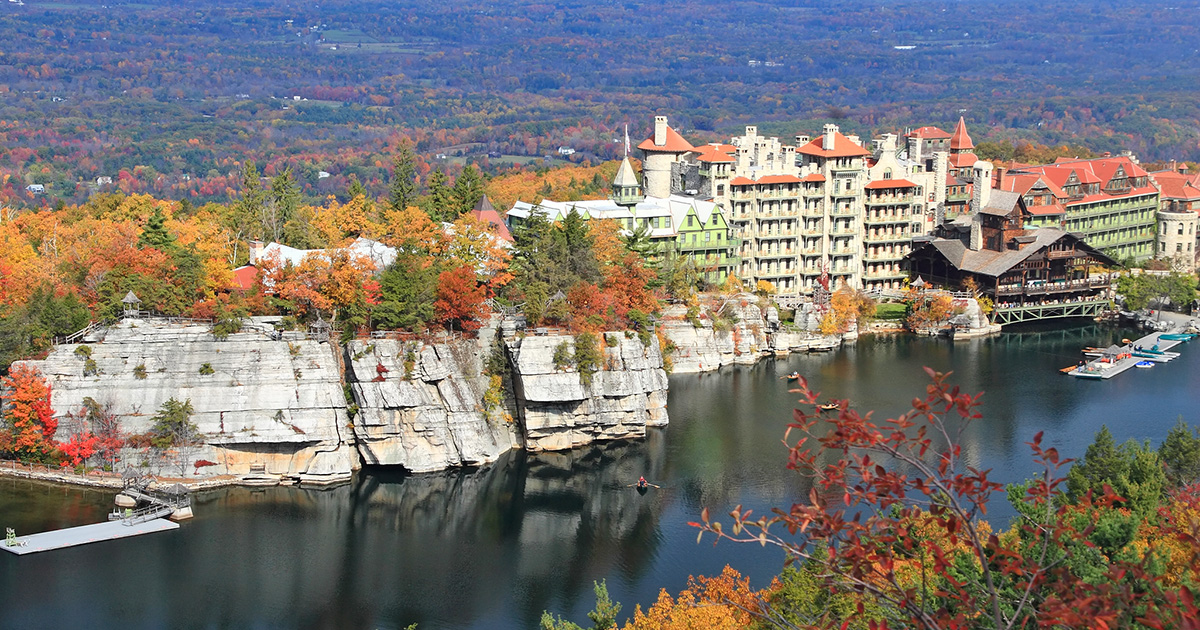
The primary error in assessing the domestic highland-resort sector is the belief that “luxury” is an inherent quality of the property rather than a byproduct of its optimized back-of-house operations. Mastering the nuances of american mountain resort destinations involves recognizing that these properties are subject to distinct classes of pressure: infrastructure maintenance, high-altitude energy demand, and topographical regulation. A property that is too reliant on external municipal infrastructure—such as local utility grids or regional labor pools—is frequently vulnerable to climatic or logistical volatility, regardless of how “exclusive” its guest experience claims to be.
Oversimplification in this space is rampant, particularly regarding the role of “seasonality” as a static business variable. There is a common assumption that a resort is either “winter-focused” or “year-round.” In reality, the most sophisticated resorts have developed complex, multi-modal operational structures that shift their infrastructure usage throughout the year, turning what were once dormant facilities into functional assets. Understanding these destinations requires looking past the visual presentation to the technical reality of the site. A boutique, owner-operated property with a high degree of vertical integration often manages risk more effectively than a sprawling, corporate-franchised complex that lacks direct, centralized accountability for its seasonal resource consumption.
Deep Contextual Background: The Evolution of Highland Retreats
The American mountain resort landscape was historically defined by the pioneering work of 20th-century designers who sought to harmonize high-design with the harshness of the alpine climate. The emergence of the contemporary “resort town” category represented a synthesis of these models, attempting to marry the high-touch service ethos of the lodge with the technical sophistication and resource density of modern municipal management.
However, the economic reality of this synthesis remains challenging. As climate-related pressures on snowpack and temperature have intensified, the financial viability of operating a mountain resort has become contingent on aggressive resource-management and efficiency diversification. Consequently, the sector has undergone a process of institutionalization. The current market is defined by owners who treat hospitality as an enterprise, prioritizing measurable resource efficiency and data-driven service optimization over the more romanticized ideals of mid-century highland living.
Conceptual Frameworks and Mental Models
-
The Resource-Autonomy Index: Measure how much of the property’s water, power, and snowmaking capabilities are sourced internally versus relying on external, vulnerable municipal suppliers.
-
The “Black-Box” Vulnerability: Assess the reliance on external vendors for core guest-facing services. If the quality of the resort experience depends entirely on a third-party transportation or food-delivery service, the property is a fragile system.
-
The Topographical-Regulation Framework: Evaluate the property’s ability to remain functional during extreme weather events or structural failures without compromising guest comfort or system integrity.
-
The Complexity-Density Model: A mountain resort is effectively a high-density environment in a scarce-resource footprint. Analyze how effectively the design handles the peak-load capacity of guests versus the physical limitations of the mountain landscape and site-level infrastructure.
Categorizing Operational Architectures
| Architecture Type | Primary Strength | Operational Constraint |
| The Vertically Integrated Hub | Maximum resource control | High overhead/High staffing demand |
| The Lean-Outsourced Model | Low initial capital expenditure | Highly vulnerable to supply-chain failure |
| The Regenerative-Stewardship Resort | High brand-equity/ESG appeal | Extreme management complexity |
| The Data-Optimized Estate | Maximum revenue-per-guest | Potential for “dehumanized” experience |
Decision Logic: If your criteria for identifying high-performing resorts are stability and consistency in a rugged climate, lean toward the Vertically Integrated Hub. These properties are the least likely to suffer from the cascading failure modes typical of outsourced operations.
Detailed Real-World Scenarios
Scenario: The “Water-Table” Failure
A mountain resort relies on a single source for its snowmaking water. A seasonal drought forces local regulation to restrict use. Because the property lacks water-storage redundancy or automated snow-harvesting capabilities, it faces a total service collapse during the critical winter season. Success: Identifying properties that maintain multiple water sources and significant onsite reservoir capacity.
Scenario: The “Energy-Peak” Crisis
In high-demand winter months, energy costs soar. Properties that fail to account for renewable-storage or off-peak load-balancing see their operational margins erased, which forces them to cut back on essential lift and lodge services. Success: Identifying properties that have made strategic investments in energy-micro-grids as a core infrastructure component.
Planning, Cost, and Resource Dynamics
| Resource Type | Management Strategy | Variability |
| Infrastructural Resilience | Capital-heavy maintenance cycles | Moderate |
| Water/Snow-Harvesting Stability | Onsite storage/Treatment loops | High |
| Energy/Climate Control | Solar-micro-grid/Thermal buffering | Moderate |
Strategic Insight: The most effective way to navigate the landscape of american mountain resort destinations is to recognize that operational excellence is a high-cost component. Properties that seem consistently underpriced relative to their stated service level are likely under-investing in their internal infrastructure or resource-resilience strategies.
Tools, Strategies, and Support Systems
-
Resource-Management Auditing: Review environmental impact reports or municipal utility disclosures to identify how a property handles its resource relationships.
-
Infrastructure-Resilience Mapping: Utilize climatic data to determine if the property’s location is prone to extreme weather events that could cripple a highland-based operation.
-
Third-Party Vetting Services: When evaluating high-value stays, engage specialized consultancy firms that focus on independent hospitality auditing.
-
Operational Inquiry: Contact the property’s general manager with specific questions about their in-house water and energy capabilities (e.g., “Do you handle your own snow-water treatment?”) rather than the marketing desk.
Risk Landscape and Failure Modes
The primary risks for these properties include:
-
The Scaling Trap: Attempting to expand the number of units or lifts without proportionally increasing the resource-management infrastructure.
-
Service-Degradation Cycles: When a resort cuts costs to meet financial goals, it often loses the very thing that justifies its market position, leading to a negative feedback loop.
-
Climatic-Entropy: Properties in ecologically sensitive highlands often face intensifying regulation and environmental challenges that, if not proactively managed, can result in terminal operational constraints.
Governance and Long-Term Adaptation
Treat your evaluation of any property within the highland-resort ecosystem as a multi-year assessment.
-
The Ownership Cycle: A change in ownership is the most common trigger for a shift in operational philosophy. Monitor who is behind the capital.
-
The Adaptation Trigger: If a property consistently relies on outsourced labor or third-party service providers, watch for signs of “experience dilution.”
-
The Layered Checklist: Maintain a document tracking the property’s performance on core reliability metrics (e.g., responsiveness, resource usage, infrastructure maintenance) to build an objective record over time.
Measurement, Tracking, and Evaluation
-
Leading Indicators: The quality of the property’s digital communication and their transparency regarding operational capabilities.
-
Lagging Indicators: The frequency and duration of service-disruptions or facility closures reported by past guests.
-
Qualitative Signal: Do the employees speak about “stewardship and precision” as core duties, or is their professional focus primarily on “experience and hospitality”?
Common Misconceptions and Oversimplifications
-
“Mountain resort means consistent snow.” Most modern resorts are feats of engineering, requiring constant, intensive snow-harvesting and management, not just natural snowfall.
-
“Independent properties are more authentic.” Authenticity is often a result of high capital investment and meticulous professional management, not just “being independent.”
-
“Infrastructure is just for show.” In sophisticated highland design, infrastructure—like drainage or snow-storage—is a functional element of resilience.
-
“Geography is everything.” Geography is a risk-factor that requires expensive engineering and resource-management to mitigate effectively.
-
“Management teams are less sophisticated than those in major urban hotels.” In fact, the most effective mountain resort managers are often more multi-disciplinary than their urban counterparts.
Conclusion
Understanding the american mountain resort destinations requires a fundamental shift from romanticized perception to hard-nosed operational analysis. By prioritizing properties that utilize high degrees of vertical integration, maintain robust infrastructural resilience, and possess a clear, demonstrable commitment to operational precision, the reader secures a level of quality that mere marketing cannot provide. These properties are not just places of leisure; they are complex, enterprise-grade logistical systems that must be audited as such. Stability in this sector is not a matter of chance; it is the product of rigorous, behind-the-scenes architectural, financial, and operational engineering.