The pursuit of restorative travel often leads to the water’s edge. While coastal resorts frequently dominate the luxury travel discourse, lakeside environments offer a distinct psychological and aesthetic cadence—a sense of containment and stillness that contrasts sharply with the expansive, often kinetic energy of the ocean. For the discerning traveler, identifying the appropriate setting requires navigating a market where the term “resort” is applied with increasing looseness, often obscuring profound differences in operational philosophy, structural maturity, and ecological integration.
Distinguishing between a property that merely occupies a shoreline and one that effectively mediates a relationship with it is the primary challenge for the serious researcher. Achieving this level of clarity requires a move away from standard aggregator rankings and toward an analytical framework that prioritizes structural intentionality and service-to-environment equilibrium.
Understanding “best lakeside resort hotels in the us”
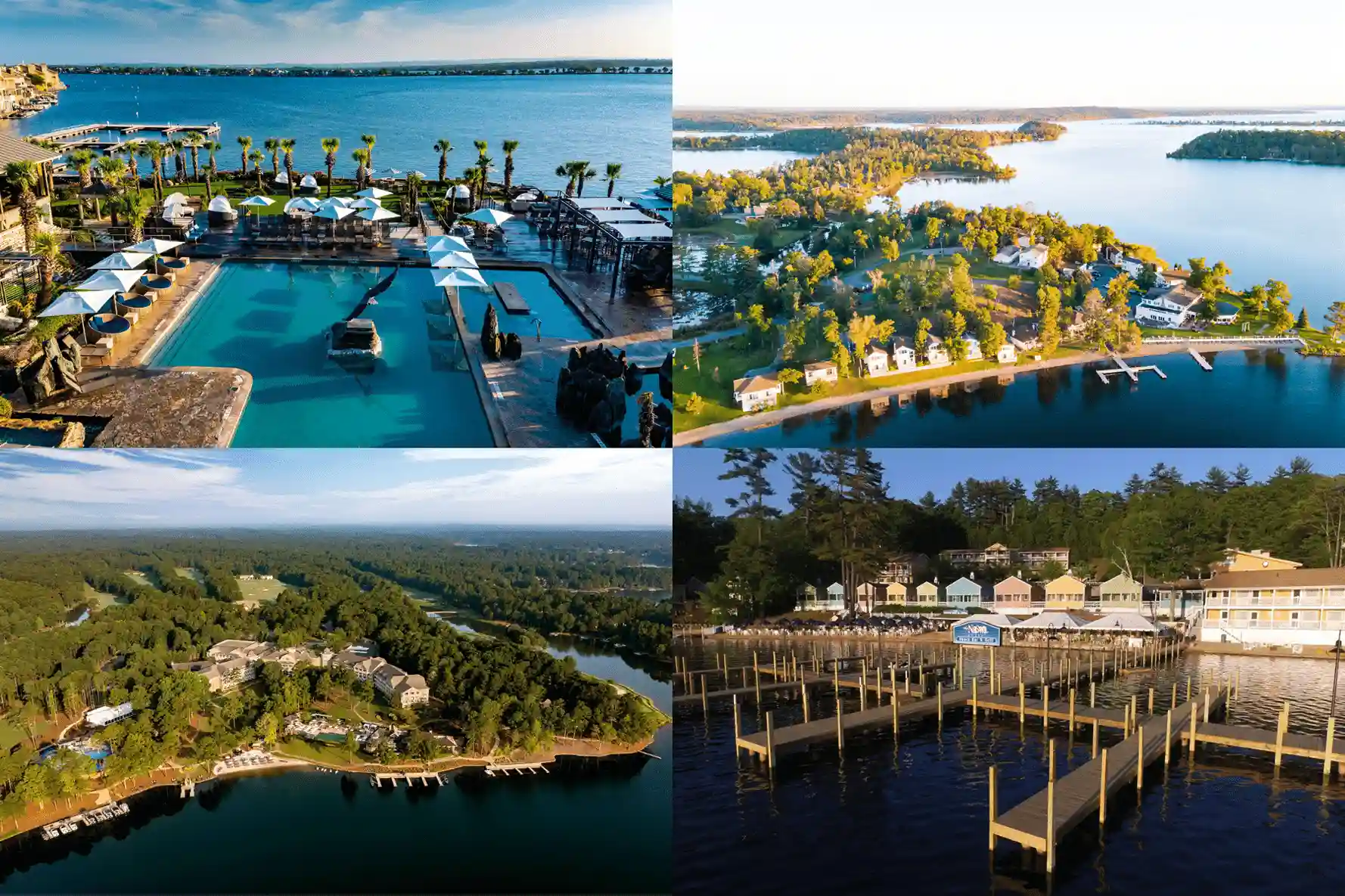
The search for the best lakeside resort hotels in the us is frequently complicated by the marketing imperative to define “waterfront” in the broadest possible terms. An establishment may be categorized as a lake resort despite being separated from the water by a road, a parking facility, or a significant vertical incline, all of which compromise the essential intimacy required for true lakeside restoration.
One of the most persistent misunderstandings involves the correlation between amenity density and quality. Modern hospitality trends favor a proliferation of options—multiple dining venues, expansive fitness complexes, and complex programming—which can inadvertently fragment the very tranquility a guest seeks. The “best” properties are rarely those that attempt to be everything; rather, they are the ones that curate an environment where the lake itself functions as the primary amenity.
Deep Contextual Background: The Evolution of Lake-Centric Leisure
The trajectory of lake-based hospitality in the United States reflects a centuries-long evolution of the American relationship with wilderness. In the late 19th century, the Chautauqua Movement—a cultural and educational phenomenon—established the foundational model for the seasonal lakeside retreat.
As the 20th century progressed, this model underwent a systemic shift. The advent of widespread automobile travel decoupled these resorts from their original, often rail-dependent locations, allowing for the development of more remote, “wilderness-adjacent” properties. By the mid-century, the focus had shifted toward “leisure infrastructure.” Golf courses, expansive docks, and formal dining halls were added to sustain longer stays. In the current landscape, we are witnessing a return to the roots of the movement: a preference for ecological integration, quietude, and a form of “slow hospitality” that prioritizes the quality of the internal experience over the quantity of external stimulation.
Conceptual Frameworks and Mental Models
To evaluate potential destinations with professional rigor, one should employ the following analytical lenses:
-
The Hydrologic Integration Index: A measurement of how physical boundaries—walls, fences, or elevated patios—affect the guest’s sense of connection to the water. High-scoring properties utilize design cues (e.g., infinity-edge integration, low-profile architecture) to ensure that the lake is a visual and sensory constant.
-
Service-to-Environment Ratio: This framework assesses whether the resort’s staff and amenities enhance the natural environment or serve to insulate the guest from it. Excessive concierge-led activity can often distract from the raw restorative potential of a quiet shoreline.
-
Adaptive Management Lifecycle: A property’s status as one of the best lakeside resort hotels in the us is never static. Does the resort adapt its infrastructure to shifting environmental conditions, or is it operating on the momentum of a previous decade’s design philosophy?
Categorization and Operational Trade-offs
| Category | Typical Profile | Primary Strength | Potential Limitation |
| Legacy Lodges | Historic, rustic architecture | Authentic sense of place | Dated infrastructure; maintenance cycles |
| Boutique Eco-Retreats | Small-scale, modern design | High ecological intimacy | Limited service range; seasonal sensitivity |
| Full-Service Luxury Hubs | Large-scale, golf/spa centric | Predictable, high-end service | Higher human/structural density |
| Private Estate Rentals | Low-density, exclusive use | Absolute privacy | Lack of professional concierge services |
Decision logic in this context relies on identifying the “friction point” of the trip. If the objective is deep, uninterrupted work or reflection, the Boutique Eco-Retreat is the logical selection.
Detailed Real-World Scenarios
-
The Seasonal Transition Risk: A traveler selects a highly rated mountain lake resort in late spring, failing to account for the “shoulder season” operational gap where secondary amenities (boat rentals, terrace dining) remain closed. The failure mode here is a lack of alignment between expectations and the property’s actual operational calendar.
-
The Over-Programming Trap: A group booking at a “top-tier” resort finds their desire for quietude thwarted by a rigid, high-energy activity schedule. Success in this scenario would have required vetting the resort’s “quiet hours” and programming flexibility prior to reservation.
-
Connectivity versus Isolation: Remote lakeside resorts often face infrastructure limitations. A guest requiring high-speed connectivity for professional obligations must treat this as a primary filter, as the most “authentic” wilderness locations may lack the redundant systems necessary for modern digital workflows.
Planning, Cost, and Resource Dynamics
The economic profile of these resorts is highly variable. Unlike city-based luxury, which is often standardized, the cost of a lakeside resort is heavily skewed by its “access premium”—the cost of maintaining private shoreline and seasonal infrastructure in remote areas.
-
Direct Costs: Room rates often fluctuate significantly based on seasonal “water access” windows.
-
Indirect Costs: Many of the best lakeside resort hotels in the us are located in geographically isolated regions. The logistical cost—private transport, limited local supply chains, and specialized activity fees—often exceeds the initial nightly room rate.
Risk Landscape and Failure Modes
The “best” resorts are vulnerable to compounding risks: environmental degradation, loss of staff continuity, and the erosion of privacy through peripheral real estate development. A recurring failure mode is the “incremental expansion”—a resort adds too many rooms or activities, thereby altering the very atmosphere that allowed it to be classified as a high-tier retreat in the first place.
Governance, Maintenance, and Long-Term Adaptation
Monitoring the health of a potential destination requires more than reading reviews. Are they investing in modern, sustainable building technologies? A resort that prioritizes the long-term health of the lake it occupies is statistically more likely to provide a superior guest experience, as it acknowledges that the environment is the foundation of its commercial viability.
Common Misconceptions and Oversimplifications
-
Myth: All-inclusive models imply lower quality. Correction: When managed correctly, all-inclusive lakeside models remove the transactional friction of daily expenses, allowing for a more immersive, “home-like” experience.
-
Myth: High density equals high service. Correction: High density often forces a move toward standardized, formulaic service that lacks the nuance of lower-density, high-touch properties.
-
Myth: Proximity to the water is sufficient. Correction: Access is not immersion. A view is valuable, but the ability to enter the water directly from one’s living space is a distinct category of luxury.
Conclusion
The identification of the best lakeside resort hotels in the us demands a departure from the “listicle” approach to travel planning. It requires an analytical commitment to understanding the intersection of environmental setting, operational intent, and the traveler’s own restorative needs. By focusing on the structural and conceptual frameworks that define high-tier retreats, the discerning traveler moves from being a mere consumer of hospitality to an active participant in the selection of an experience that is authentic, durable, and profoundly restorative. Adaptation and research remain the final, essential tools in ensuring that the chosen destination meets the gravity of the intended retreat.