The modern digital nomad often approaches the resort environment with a fundamental paradox in mind: the search for a space that is simultaneously a professional hub and a site of total leisure. This dual requirement has forced a significant pivot in the hospitality sector, yet a substantial gap remains between the marketing of “work-friendly” amenities and the granular reality of remote operational needs. Many properties promote themselves as viable bases for long-term stays, but fail to account for the specialized infrastructure—synchronous connectivity, ergonomic stability, and ambient control—that determines the feasibility of a productive workday.
Navigating this terrain requires an analytical approach that transcends the gloss of promotional photography. The objective is to identify properties that treat the “work-from-resort” guest not as a transient luxury traveler, but as an operational partner whose professional output is the central metric of the stay. This article provides a rigorous framework for evaluating these environments, ensuring that the choice of lodging aligns with the rigorous demands of a remote professional lifestyle.
Understanding “best resort hotels for digital nomads”
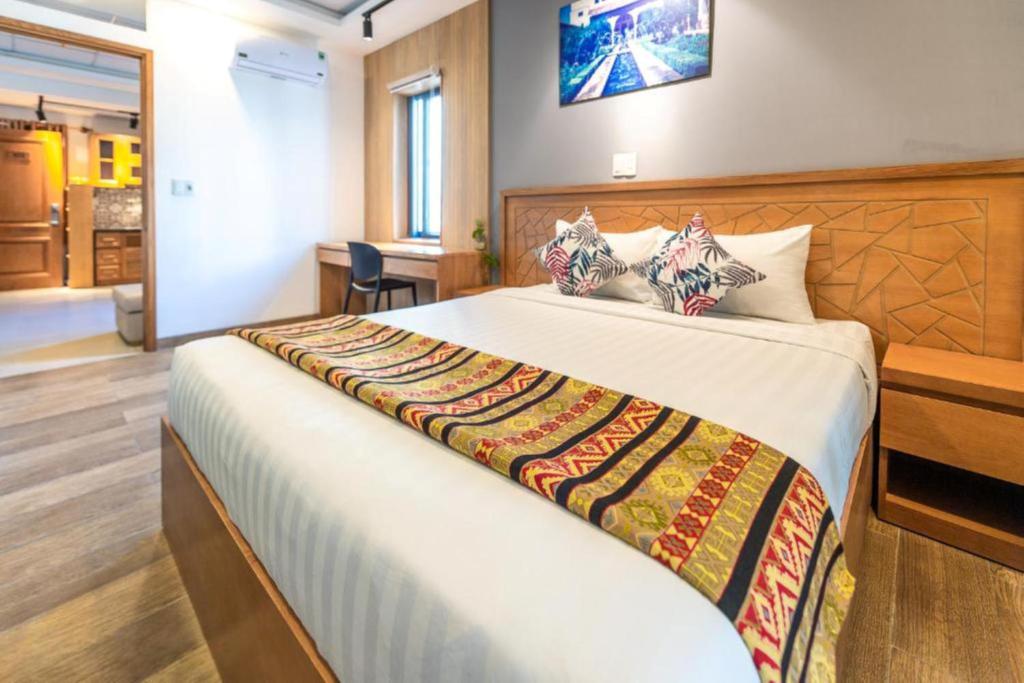
To identify the best resort hotels for digital nomads, one must look beyond high-speed Wi-Fi as a single proxy for quality. The true “best” properties are those that have fundamentally integrated the concept of professional residence into their design. A common misunderstanding is that a luxury suite is sufficient; in reality, the most critical factor is the “infrastructure of productivity”—the availability of dedicated, ergonomic workspaces, noise-controlled zones, and IT support capable of diagnosing issues beyond the standard “restart the router” advice.
Oversimplification often arises when travelers prioritize aesthetic beauty over operational reliability. A remote villa in an exotic locale may offer profound focus, but if it lacks stable power redundancy or professional-grade connectivity, it is a liability, not an asset. When you research the best resort hotels for digital nomads, you must assess the property’s “functional durability.” Does the property offer flexible cleaning schedules to ensure the work environment remains undisturbed? Is there an established protocol for technical emergencies? The most effective destinations are those that offer a hybrid of comfort and professional resilience, allowing the guest to maintain continuity despite the inherent instability of nomadic life.
Deep Contextual Background: The Evolution of Professional Mobility
The history of the “work-from-hotel” phenomenon is a shift from the isolated “business hotel”—designed for the short-term, task-oriented traveler—to the integrated “work-station,” where the lines between professional labor and vacation leisure are blurred. Originally, hotels provided only the bare minimum for professional needs: a desk and a basic phone line. The rise of global remote work necessitated a shift toward more robust, long-term configurations.
Today, the industry is seeing the emergence of “coliving-resort hybrids,” where property management understands that their guests are not merely visitors, but temporary inhabitants. This evolution has led to a diversification of service models, including extended-stay packages that bundle essential business services such as secure data environments, printing, and administrative support. We are currently in a transition period where the most sophisticated properties are no longer just selling a bed, but a stable, high-performance professional ecosystem.
Conceptual Frameworks and Mental Models
To evaluate your potential bases with professional rigor, utilize the following analytical models:
-
The Continuity of Performance Index: Measure the property’s ability to maintain “office-grade” conditions (internet latency, power stability, ambient noise) under peak occupancy.
-
The Ergonomic Baseline: Assess whether the room design supports the “long-sit” requirement. A beautiful lounge chair is not a substitute for a task chair; the best properties understand this distinction.
-
The Isolation-Engagement Spectrum: Does the resort force you into solitude, or does it offer community-based coworking spaces that facilitate professional networking?
Categorization and Operational Trade-offs
| Property Category | Infrastructure Profile | Cost/Value Ratio | Best For |
| Boutique Hybrid | High-touch, localized tech | Moderate/Premium | Deep focus, niche networking |
| Global Conglomerate | Standardized, predictable | High/Premium | Reliability, global consistency |
| Remote Eco-Estate | Minimalist, environmental | High/Variable | Creative output, deep immersion |
| Urban-Resort Hybrid | High-density, professional | Moderate/Stable | Rapid transit, network access |
The decision logic should follow the “Work-Life Friction” rule: The more demanding your technical requirements, the more you should prioritize Global Conglomerate properties that provide audited, standardized business infrastructure.
Detailed Real-World Scenarios
-
The Power-Grid Dependency: A nomad chooses a remote resort for a two-week project. During a localized storm, the grid fails. The property has no generator for individual villas. The failure mode here is a lack of “Infrastructure Vetting.” Always verify the presence of active, room-level power backups.
-
The Ergonomic Failure: A guest spends 10 hours a day on a low-height coffee table. By day four, physical strain necessitates a premature departure. The best resort hotels for digital nomads proactively offer high-quality, adjustable task seating upon request.
-
The Digital Security Gap: An employee accesses sensitive company data over a public, non-segmented hotel network. The risk is a compromise of data sovereignty. Proactive nomads carry travel routers to create a private, secure VLAN regardless of the property’s network configuration.
Planning, Cost, and Resource Dynamics
The economic profile of these stays is often inflated by “experience premiums” that do not benefit the worker.
-
Direct Costs: Room rate + daily business amenities (e.g., coworking pass).
-
Indirect Costs: The time lost to “logistical churn”—the effort of finding coffee, stable power, and transport.
-
Cost Range Table:
-
Baseline (Standardized/High Density): $200–$400/night
-
Mid-Tier (Custom/Boutique): $500–$900/night
-
Premium (Full-Integration Hybrid): $1,000+/night
-
Risk Landscape and Failure Modes
The primary failure mode is “operational drift”—where a property promises nomad-friendly infrastructure but fails to maintain it due to staff turnover or neglect. Compounding this is the “culture of distraction,” where the resort’s leisure focus (pool parties, loud music) directly conflicts with the professional’s need for focus. Mitigation involves conducting “pre-arrival infrastructure audits”—requesting current, independent speed tests and images of the desk and chair setups before committing to a stay.
Governance, Maintenance, and Long-Term Adaptation
To effectively use the best resort hotels for digital nomads, implement a “Stay-Lifecycle Plan.” For stays exceeding two weeks, negotiate a “residency agreement” with the property. This should define expectations regarding housekeeping timing, connectivity support, and quiet hours. A property that refuses to engage in such agreements is likely not a true partner in your professional success and should be avoided for high-stakes projects.
Measurement, Tracking, and Evaluation
-
Leading Indicators: The precision of the response to your technical requirements. If the resort cannot articulate their internet upload speed or chair adjustability, they are likely unqualified.
-
Qualitative Signals: Reviews that mention “distractions” or “connectivity issues” should be weighted heavily, regardless of how beautiful the property appears.
-
Documentation Example: Maintain a “Work-Fit Log” for every stay. Record your daily productivity scores, technical issues, and ergonomics rating. This builds a personal database of verified locations for your future travel.
Common Misconceptions and Oversimplifications
-
Myth: “Luxury resorts are automatically work-ready.” Correction: Luxury is often synonymous with leisure; the best professional environments are frequently found in mid-tier, business-oriented resort hybrids.
-
Myth: “Shared workspaces are always productive.” Correction: Many “coworking” spaces in resorts are designed for socializing, not deep, high-stakes professional output.
-
Myth: “All remote work visas cover hotel residency.” Correction: Some jurisdictions require a formal, long-term lease; a resort receipt may not satisfy residency documentation.
Conclusion
The selection of the best resort hotels for digital nomads is not a search for the most beautiful view, but an exercise in strategic asset management. By prioritizing properties that demonstrate high operational integrity, ergonomic foresight, and technical reliability, the nomadic professional can turn an inherently unstable lifestyle into a high-performance career model. Success requires a departure from the “vacationer” mindset; one must evaluate a property with the same critical eye applied to an office space. When the environment is correctly vetted, the resort becomes a powerful, productive base rather than a source of professional friction.