The modern family-focused resort, when scrutinized through the lens of operational performance, functions as an exceptionally high-entropy environment. It is an infrastructure where thousands of distinct human trajectories—parents, children, service staff, external suppliers, and facility managers—intersect within a confined, often semi-isolated geographical area. When the average traveler identifies the best resort hotels for families, the focus is typically on superficial metrics such as pool square footage or stylized promotional photography. However, true institutional stability—the hallmark of legitimate family hospitality—is determined by a resort’s internal operational resilience, its child-safety protocols, and its ability to manage the unforeseen under peak-load conditions.
This forensic examination treats the resort not as a place of rest, but as a complex system of cascading interdependencies. A failure in a resort’s childcare-supervision ratio, for instance, does not merely result in a logistical hiccup; it triggers a domino effect that impacts parental stress-levels, legal liability, staff morale, and the property’s long-term reputation. The informed parent must approach property selection with the rigor of a project manager, identifying properties that have engineered deep, physical, and procedural redundancy into their core systems. This is the difference between a facility that merely “markets” family-friendly amenities and one that is structurally designed to guarantee the safety and development of the guest.
This article serves as a definitive reference for those seeking to understand the mechanics of operational resilience in high-density, multi-generational hospitality environments. It explores the systemic lapses that often plague mass-market properties, the importance of vertical integration in maintaining standards, and the strategies for identifying a property that treats risk management as a primary operational objective.
Understanding best resort hotels for families
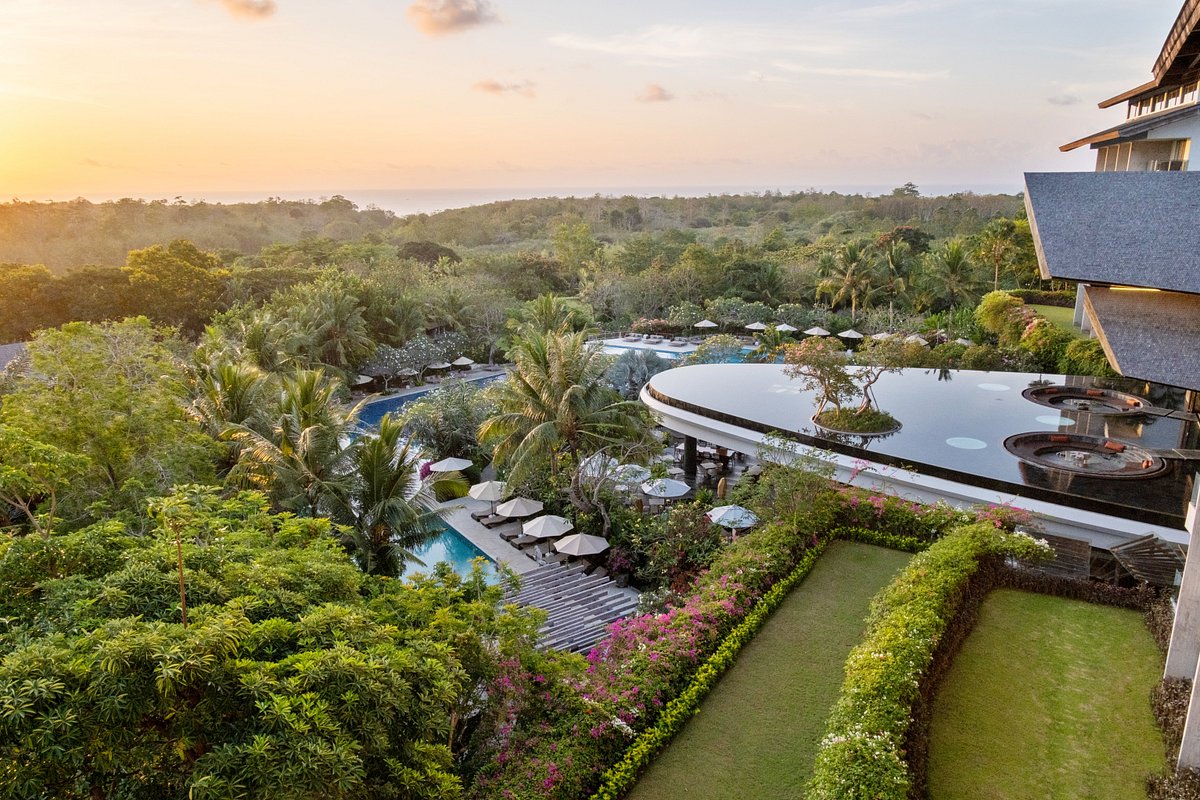
The primary error in assessing systemic excellence is the tendency to aggregate all shortcomings into a single, monolithic “incompetence” category. In reality, properties are subject to distinct classes of failure: systemic (infrastructure-based), operational (process-based), and environmental (geographic-based). Mastering the nuances of the best resort hotels for families involves understanding that these categories often compound. For example, a minor environmental trigger—such as a coastal storm—can expose a property’s systemic failure (a lack of power-grid redundancy), which then collapses its operational capacity (its ability to maintain essential, child-specific services).
Oversimplification in this space is rampant, particularly regarding the role of “brand” as a proxy for success. A luxury brand name is often mistaken for a hallmark of operational excellence; however, in many cases, large-scale hospitality conglomerates operate via franchising models where the local property management holds full autonomy over risk-mitigation standards. Understanding the landscape of best resort hotels for families requires looking past the brand’s global marketing to the local property’s technical infrastructure. A boutique, owner-operated property with a high degree of vertical integration often manages risk more effectively than a sprawling, franchised complex that lacks direct, centralized accountability for its internal systems.
Deep Contextual Background: The Evolution of Family Hospitality
Historically, the resort was a self-sufficient entity, often located in remote areas where the property manager was the sole authority on safety, law, and utility maintenance. As the industry evolved toward globalization, the focus shifted to standardized guest services, often at the expense of local infrastructure resilience. The rapid expansion of mass-market, all-inclusive models further diluted the focus on quality control, as the objective shifted from creating a resilient ecosystem to maximizing throughput and standardizing the consumer product.
We are now in an era where the scale of these resorts has outpaced the capabilities of many local municipal authorities to provide adequate security, fire-response, or medical care. Consequently, the burden of maintenance has returned entirely to the resort operator. The most successful modern properties are those that have “re-internalized” these municipal-level functions—owning their own desalination plants, power micro-grids, and private, highly-trained security teams. The most effective of the best resort hotels for families today stem primarily from an ability to adapt to this “re-internalization” requirement, ensuring stability in the face of local infrastructural limitations.
Conceptual Frameworks and Mental Models
-
The Redundancy Ratio: Calculate the resort’s ability to maintain core services (power, water, communication, childcare) independently for at least 72 hours.
-
The Logistical-Isolation Model: Evaluate the property’s reliance on the surrounding community for emergency support. High-tier properties are those that rely on internal, self-sufficient services, which remain reliable even when municipal infrastructure falters.
-
The “Black-Box” Vulnerability: Identify internal service systems that are managed by third-party vendors. If a resort relies on an external, unvetted contractor for critical tasks like food safety or electrical maintenance, that vendor becomes a primary risk vector.
-
The Human-Factor Stress Test: Analyze the property’s staff-to-guest ratio during peak occupancy. Under-staffing is the most frequent precursor to operational negligence.
Categorizing Operational Architectures
| Architecture Type | Primary Strength | Operational Constraint |
| The Frictionless Estate | Deep-service/Concierge-first | High labor/Operational cost |
| The Utility-Max Hub | Scalable/Predictable efficiency | Lower-tier service personalization |
| The Eco-Stewardship Resort | Localized/High-authenticity | Supply-chain resilience challenges |
| The Tiered-Experience Model | Custom-fit/Data-driven | High complexity in management |
Decision Logic: If the core requirement is to identify best resort hotels for families, favor properties with high levels of vertical integration. A property that manages its own utilities and supply chain possesses a significantly lower vulnerability index than one that delegates these functions to third-party vendors.
Detailed Real-World Scenarios
Scenario: The “Utility-Failure” Cascade
A property suffers a grid-power failure. The lack of an on-site, automated micro-grid causes an immediate shutdown of water-pumping systems, which leads to a sanitation crisis within 24 hours. Failure: A lack of systemic redundancy for essential utility services. Decision point: Verify the property’s onsite energy-generation capacity before booking.
Scenario: The “Outsourced-Food-Safety” Crisis
A resort delegates its procurement and storage to an off-site partner. An issue in the cold-chain transport results in a resort-wide foodborne illness event. Failure: Outsourced critical-path logistics. Success: Vertical integration, where the resort maintains direct control over the entire supply chain from sourcing to delivery.
Planning, Cost, and Resource Dynamics
| Resource Type | Management Strategy | Variability |
| Resilience-Audit | Advance site-due-diligence | Low |
| Emergency-Liquidity Buffer | Personal/Professional insurance | Moderate |
| Contingency-Transit Costs | High-speed, private-charter options | High |
Strategic Insight: The most effective way to address the selection of best resort hotels for families is to recognize that safety is a high-cost component of the hospitality product. Properties that consistently underperform on price are often cutting corners in exactly the areas—utility redundancy, staff training, and security—that directly impact the family’s safety.
Tools, Strategies, and Support Systems
-
Site-Resilience Mapping: Utilize satellite-view and infrastructure-data sources to assess the distance between the resort and emergency-response facilities.
-
Institutional-Performance Audits: Request access to the resort’s public disclosures regarding environmental and social governance (ESG), which often contain critical data on utility-management and safety standards.
-
Third-Party Technical Vetting: Consult with specialized risk-consultancy firms if the intent is to stay at a property in a high-entropy zone for a long duration.
-
On-Site Operational Inquiry: Contact the resort’s Director of Operations (not the marketing department) with specific questions about their redundant utility-management protocols.
Risk Landscape and Failure Modes
The primary risk in the modern resort is Operational-Complexity. The more integrated and automated a facility becomes, the more points of failure exist. The taxonomy of risk includes “Scaling-Entropy,” where the facility’s growth outstrips its security and utility infrastructure, and “Vendor-Dependence,” where the resort becomes a prisoner of its lowest-quality subcontractor.
Governance and Long-Term Adaptation
Treat your relationship with a resort as a high-stakes, iterative contract:
-
The Due-Diligence Cycle: Audit the property’s management structure every 12 months. Changes in general-manager tenure are often signals of impending shifts in operational philosophy.
-
The Adaptation Trigger: If an audit reveals a decline in infrastructure reinvestment (e.g., outdated utility systems, visible signs of deferred maintenance), trigger an immediate review of the property’s continued suitability.
-
The Layered Checklist: Maintain a document tracking the property’s performance on core safety metrics (e.g., response time to technical requests, maintenance history) to build a long-term institutional record.
Measurement, Tracking, and Evaluation
-
Leading Indicators: The precision of the resort’s response to complex technical questions, and the quality of their digital documentation regarding safety and utility protocols.
-
Lagging Indicators: The frequency and duration of service-disruptions (power, water, data) reported by recent guests or internal property-logs.
-
Qualitative Signal: Do the employees speak about “safety and stewardship” as core duties, or is their discourse restricted to service-performance?
Common Misconceptions and Oversimplifications
-
“High star-ratings indicate high safety-standards.” Ratings are aesthetic, not mechanical. They reflect design, not systemic reliability.
-
“Travel-insurance is a full risk-mitigation strategy.” It provides financial restitution but does not prevent the physical-logistical failure or the immediate, life-critical consequences of an event.
-
“Brand-name familiarity is a proxy for technical-resilience.” Franchised properties have highly variable local-management standards regardless of the parent brand.
-
“Geographic isolation is inherently safe.” It is often inherently dangerous if the resort lacks fully redundant, self-contained systems.
-
“Outsourcing non-core tasks (like food, laundry, maintenance) is efficient.” It is a common driver of operational risk-exposure and is rarely found in the best resort hotels for families lists.
-
“Technological integration always simplifies risk-management.” It increases complexity and introduces new, technical points of failure.
Conclusion
Identifying the best resort hotels for families requires a fundamental shift from passive, leisure-based planning to active, institutional-grade auditing. By prioritizing properties that utilize high degrees of vertical integration, maintain robust utility-redundancy, and possess a clear, demonstrable commitment to technical infrastructure, the traveler secures a degree of certainty that standard travel advice fails to provide. The most resilient resorts are those that function as independent, enterprise-grade facilities, capable of sustaining their own ecosystems in the face of environmental or systemic stress. Safety in the modern resort is not a matter of chance; it is a product of rigorous, behind-the-scenes architectural and operational engineering.