The American boutique resort sector represents an intriguing friction point between industrialized scale and the pursuit of curated guest experience. Unlike traditional, high-density hotel chains that prioritize predictable throughput and standardized output, the boutique model relies on the successful management of “high-touch” variables in inherently unpredictable environments. When observers analyze the landscape of boutique resort hotels usa, they often focus on the aesthetic—the interior design, the regional culinary influences, or the architectural integration with the landscape. However, the true durability of these properties is rarely determined by their visual narrative. Instead, it is governed by their operational resilience, their ability to navigate the complexities of local supply chains, and their capacity to maintain service standards without the cushion of a global corporate infrastructure.
This forensic examination treats the boutique resort not as a place of leisure, but as an exercise in high-stakes project management. These properties often function as self-contained microcosms, requiring the manager to act as a quasi-municipal authority. They must oversee their own utility management, staff training, and vendor relationships in a sector where the “boutique” label often masks the vulnerability of thin margins and operational fragility. The informed observer must approach these venues with the discernment of an auditor, looking past the marketing veneer to the structural realities that define long-term viability.
This article serves as a definitive reference for those seeking to understand the mechanics of independent hospitality in the United States. It explores the systemic failures that often plague smaller-scale operations, the necessity of vertical integration, and the criteria for identifying properties that treat operational excellence as a primary objective. By shifting the focus from the “experience” to the “system,” the reader gains the capability to distinguish between properties that are architecturally sound and those that are fundamentally under-resourced.
Understanding boutique resort hotels usa
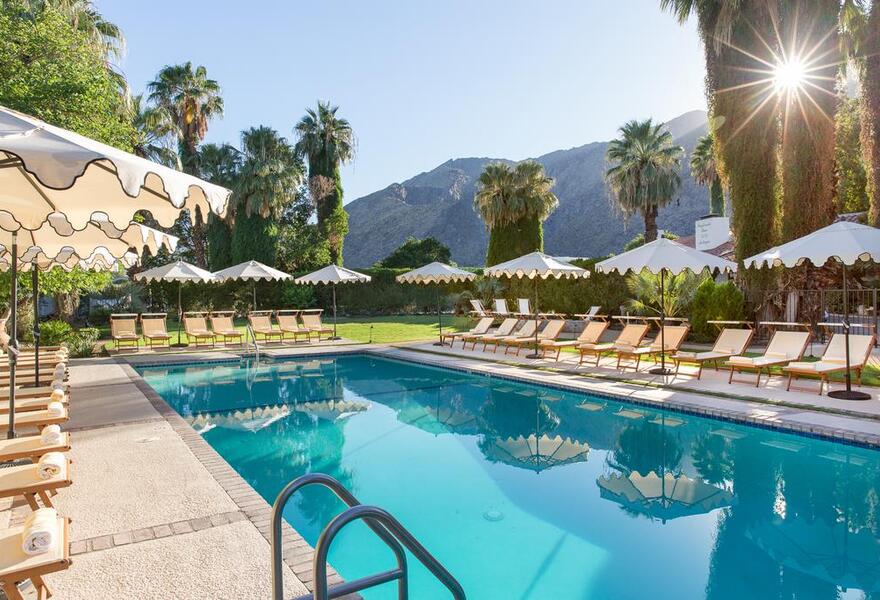
The primary error in assessing the boutique sector is the belief that “small” is synonymous with “agile.” In the context of hospitality infrastructure, small often equates to a lower tolerance for operational shocks. Mastering the nuances of boutique resort hotels usa involves recognizing that these properties are subject to distinct classes of pressure: supply-chain dependency, human-capital density, and infrastructural vulnerability. A property that is too small to exert bargaining power with distributors is frequently at the mercy of volatile local or regional markets.
Oversimplification in this space is rampant, particularly regarding the role of “autonomy” in property management. There is a common assumption that independence fosters innovation. While this is often true, it also removes the safety net of corporate institutional knowledge. The most successful boutiques in the United States have essentially created their own “corporate” structures—adopting rigorous, standardized operating procedures that allow them to maintain high quality without the associated bureaucratic bloat of larger chains.
Deep Contextual Background: The Evolution of Independent Hospitality
The American resort landscape was historically bifurcated into two extremes: massive, utilitarian vacation complexes and isolated, owner-operated lodges. The emergence of the contemporary boutique category represented a synthesis of these models. It attempted to marry the “high-touch” service ethos of the lodge with the technical and amenity sophistication of the larger complex.
However, the economic reality of this synthesis remains challenging. As property values in desirable, semi-remote locations have surged, the financial viability of operating a boutique resort has become contingent on aggressive rate-management and revenue diversification. Consequently, the boutique sector has undergone a process of institutionalization. The current market is defined by owners who treat hospitality as a venture-capital-backed enterprise, prioritizing measurable ROI and data-driven service optimization over the more romanticized ideals of mid-century hospitality.
Conceptual Frameworks and Mental Models
-
The Vertical-Integration Index: Measure how many critical services (laundry, food procurement, waste management) are controlled internally versus outsourced to third-party providers. High control equates to higher operational stability.
-
The “Black-Box” Vulnerability: Assess the reliance on external vendors for core guest-facing services. If the quality of the “boutique” experience depends entirely on a third-party catering or excursion service, the property is a fragile system.
-
The Resource-Autonomy Framework: Evaluate the property’s ability to remain functional during regional utility failures or supply-chain interruptions.
-
The Complexity-Density Model: A boutique resort is effectively a high-density environment in a small footprint. Analyze how effectively the spatial design handles the peak-load capacity of guests versus the limitations of the staff’s throughput.
Categorizing Operational Architectures
| Architecture Type | Primary Strength | Operational Constraint |
| The Vertically Integrated Hub | Maximum quality control | High overhead/High staffing demand |
| The Lean-Outsourced Model | Low initial capital expenditure | Highly vulnerable to vendor failure |
| The Regenerative-Stewardship Resort | High brand-equity/ESG appeal | Extreme management complexity |
| The Data-Optimized Boutique | Maximum revenue-per-guest | Potential for “dehumanized” experience |
Decision Logic: If your criteria for identifying high-performing boutique resort hotels usa are stability and consistency, lean toward the Vertically Integrated Hub. These properties are the least likely to suffer from the cascading failure modes typical of outsourced operations.
Detailed Real-World Scenarios
Scenario: The “Vendor-Dependence” Failure
A boutique property relies on a regional logistics provider for its food supply. A local transport issue causes a massive, week-long shortage. Because the property is small, it lacks the bargaining power to secure alternative supplies, resulting in an experience that fails to meet basic guest expectations. Success: Identifying properties that maintain “safety-stock” and multiple procurement channels.
Scenario: The “Staff-Turnover” Crisis
In high-demand boutique markets, housing for staff is often the primary bottleneck. Properties that fail to account for staff logistics see high turnover, which destroys the “boutique” service consistency. Success: Identifying properties that have made strategic investments in staff housing as a core infrastructure component.
Planning, Cost, and Resource Dynamics
| Resource Type | Management Strategy | Variability |
| Infrastructural Resilience | Capital-heavy maintenance cycles | Moderate |
| Labor/Staff Retention | Competitive-tier wage/Housing subsidy | High |
| Third-Party Vendor Vetting | Quarterly audit/Performance tracking | Low |
Strategic Insight: The most effective way to navigate the boutique resort hotels usa landscape is to recognize that operational excellence is a high-cost component. Properties that seem consistently underpriced relative to their stated service level are likely under-investing in their internal infrastructure or staff stability.
Tools, Strategies, and Support Systems
-
Supply-Chain Auditing: Review public filings or local business registries to identify how a property handles its vendor relationships.
-
Infrastructure-Resilience Mapping: Utilize environmental data to determine if the property’s location is prone to utility instability that could cripple a small-scale operation.
-
Third-Party Vetting Services: When evaluating high-value stays, engage specialized consultancy firms that focus on independent hospitality auditing.
-
Operational Inquiry: Contact the property’s general manager with specific questions about their in-house capabilities (e.g., “Do you handle your own laundry/procurement?”) rather than the marketing desk.
Risk Landscape and Failure Modes
The primary risks for these properties include:
-
The Scaling Trap: Attempting to expand the number of units without proportionally increasing the back-of-house infrastructure.
-
Service-Degradation Cycles: When a boutique resort cuts costs to meet financial goals, it often loses the very thing that justifies its “boutique” premium, leading to a negative feedback loop of decreasing demand and increasing pressure to cut costs further.
-
Geographic-Entropy: Properties in ecologically sensitive areas often face intensifying regulation and environmental challenges that, if not proactively managed, can result in terminal operational constraints.
Governance and Long-Term Adaptation
Treat your evaluation of any property within the boutique resort hotels usa ecosystem as a multi-year assessment.
-
The Ownership Cycle: A change in ownership is the most common trigger for a shift in operational philosophy. Monitor who is behind the capital.
-
The Adaptation Trigger: If a property consistently relies on outsourced labor or third-party service providers, watch for signs of “experience dilution.”
-
The Layered Checklist: Maintain a document tracking the property’s performance on core reliability metrics (e.g., responsiveness, staff tenure, infrastructure maintenance) to build an objective record over time.
Measurement, Tracking, and Evaluation
-
Leading Indicators: The quality of the property’s digital communication and their transparency regarding operational capabilities.
-
Lagging Indicators: The frequency and duration of service-disruptions or facility closures reported by past guests.
-
Qualitative Signal: Do the employees speak about “stewardship and precision” as core duties, or is their professional focus primarily on “experience and hospitality”?
Common Misconceptions and Oversimplifications
-
“Boutique means intimate and small.” Boutique often means “high-density service requirements in a small-volume operation,” which is actually a very demanding operational environment.
-
“Independent properties are more ‘authentic’.” Authenticity is often a result of high capital investment and meticulous professional management, not just “being independent.”
-
“Staff-to-guest ratios are the best metric for quality.” Training-level and logistical-integration are better indicators of consistency.
-
“Geography is everything.” Geography is a risk-factor that requires expensive engineering and utility-management to mitigate effectively.
-
“Management teams in boutique resorts are less sophisticated than those in major chains.” In fact, the most effective boutique managers are often more multi-disciplinary and capable than their corporate-chain counterparts.
Conclusion
Understanding boutique resort hotels usa requires a fundamental shift from romanticized perception to hard-nosed operational analysis. By prioritizing properties that utilize high degrees of vertical integration, maintain robust infrastructural resilience, and possess a clear, demonstrable commitment to operational precision, the reader secures a level of quality that mere marketing cannot provide. These independent properties are not just places of leisure; they are complex, enterprise-grade logistical systems that must be audited as such. Stability in this sector is not a matter of chance; it is the product of rigorous, behind-the-scenes architectural, financial, and operational engineering.