The American coastal landscape, when scrutinized through the lens of long-term habitation and economic viability, represents one of the most complex logistical environments in the country. It is a zone defined by the constant tension between desirability and fragility, where the infrastructure of daily life—utilities, transportation, and emergency response—must be engineered to withstand both the relentless physical erosion of marine environments and the extreme economic pressure of high-density human migration. When individuals seek out the premier examples of coastal lifestyle destinations usa, the search is often framed in romanticized terms of climate and access to recreation.
This forensic examination treats the coastal enclave not as a static backdrop for leisure, but as a dynamic system of cascading interdependencies. A failure in a community’s drainage infrastructure, for instance, does not just result in temporary flooding; it triggers a domino effect that impacts property-insurance premiums, tax-base stability, medical-response efficiency, and the long-term insurability of the asset itself. The informed participant in the coastal market must approach these locations with the skepticism of a developer, identifying communities that have engineered physical and economic redundancy into their core municipal systems.
This article serves as a definitive reference for those seeking to understand the mechanics of operational and socio-economic resilience in high-density shoreline environments. It explores the systemic failures that often plague low-lying or rapidly gentrifying coastal zones, the importance of zoning governance in maintaining environmental standards, and the strategies for identifying a community that treats risk management as a primary objective. By shifting the focus from “aspirational relocation” to “systemic auditing,” the reader gains the capability to distinguish between regions that represent calculated risks and those that have minimized their exposure through superior engineering, governance, and environmental foresight.
Understanding coastal lifestyle destinations usa
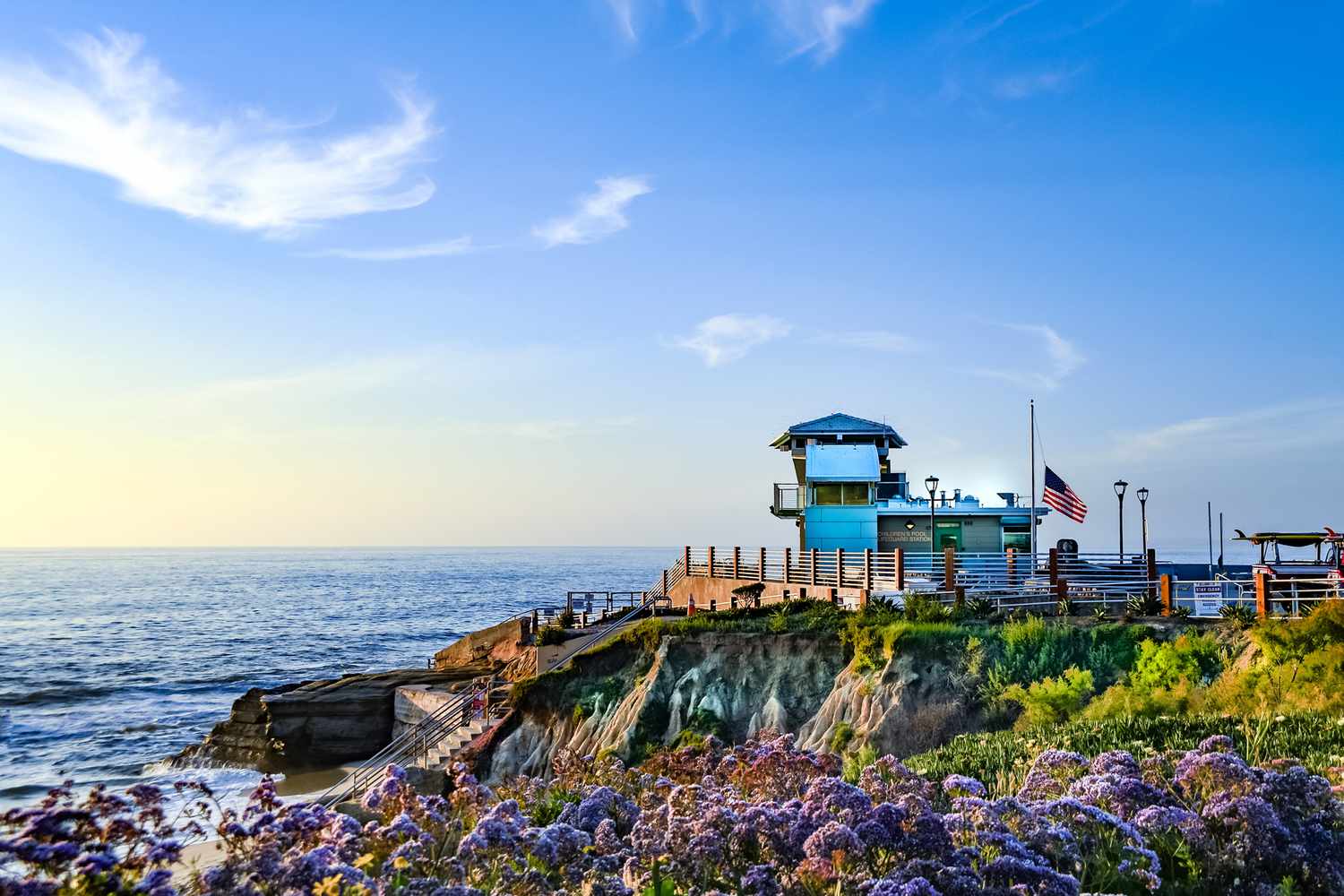
The primary error in assessing systemic excellence in coastal regions is the tendency to aggregate all shoreline environments into a single, monolithic “resort-living” category. In reality, these regions are subject to distinct classes of pressure: hydro-geological (tides and soil composition), infrastructure (the age and capacity of public works), and economic (the concentration of wealth and tourism-dependency). Mastering the nuances of coastal lifestyle destinations usa involves understanding that these categories often compound. For example, a minor environmental trigger—such as a king tide—can expose a community’s systemic failure in storm-drain design, which then collapses the local real-estate market by triggering a sudden spike in flood-insurance premiums.
Oversimplification in this space is rampant, particularly regarding the role of “scenic beauty” as a proxy for long-term stability. Understanding the true landscape of coastal lifestyle destinations usa requires looking past the curated aesthetic to the community’s technical and fiscal infrastructure. A municipality with a diversified, year-round economy and a clear, multi-decade capital improvement plan often manages risk more effectively than an isolated “seasonal-retreat” enclave that lacks a robust tax base or decentralized government oversight.
Deep Contextual Background: The Evolution of Shoreline Habitation
Historically, the coastal enclave was a transient site of commerce or industry, often localized around natural harbors. The post-war era transformed these zones into high-density residential and retirement destinations, facilitated by massive public investment in infrastructure that often ignored the inherent geological reality of the coast. This systemic evolution created an illusion of permanent, low-risk living in zones that are naturally prone to change, erosion, and climatic disruption.
We are now in an era where the scale of human investment in these zones has outpaced the capabilities of many local municipal authorities to maintain the required level of engineering protection. Consequently, the burden of resilience is increasingly falling on the homeowner and the private-market insurer. The most successful modern coastal communities are those that have “re-internalized” the cost of environmental protection—investing in dune restoration, elevated infrastructure, and high-capacity water management as part of the community’s standard operating procedure. The most resilient of the coastal lifestyle destinations usa today are those that have adapted their planning to account for these cyclical, high-intensity environmental stresses.
Conceptual Frameworks and Mental Models
-
The Resilience-Load Ratio: Calculate the community’s ability to maintain core services (power, water, communication, transportation) independently for at least 96 hours post-extreme weather event.
-
The Economic-Dependency Model: Evaluate the community’s reliance on tourism revenue versus residential tax-base stability. Communities dependent on seasonal tourism often struggle to fund long-term infrastructure maintenance.
-
The Shoreline-Regression Index: Analyze the historical rate of coastal erosion and property loss over the last thirty years.
-
The Municipal-Financial Stress Test: Examine the community’s ratio of debt-to-taxable-assets, specifically looking at how much of the municipal budget is currently allocated to climate-adaptation projects versus new development incentives.
Categorizing Coastal Socio-Economic Architectures
| Architecture Type | Primary Strength | Operational Constraint |
| The Diversified Port-Town | Tax-base depth/Year-round activity | Lower aesthetic-leisure focus |
| The Controlled-Access Enclave | High private-governance/Upkeep | Limited demographic diversity |
| The Historic-Infill District | High cultural value/Infrastructure-base | High retrofitting costs |
| The Rapid-Development Zone | Modern code compliance | High systemic/market fragility |
Decision Logic: If the core goal is long-term asset stability, the Diversified Port-Town model is the superior choice, as it provides a broader fiscal base to fund the necessary environmental and infrastructural maintenance. When evaluating coastal lifestyle destinations usa, categorize the location by these architectures before concluding that a high aesthetic value implies a stable financial or physical environment.
Detailed Real-World Scenarios
Scenario: The “Maintenance-Deficit” Trap
A community focuses on high-profile beach beautification rather than maintaining the underlying tidal-surge barriers. Failure: A lack of systemic prioritization in infrastructure investment. Decision point: Audit the municipal capital-plan for a 10-year investment history in drainage and flood-protection versus leisure-amenities.
Scenario: The “Vertical-Governance” Success
A coastal municipality mandates that all new construction include proprietary, high-capacity, on-site water retention systems, effectively decoupling the property from the overloaded municipal storm-drain network. Success: Mitigating systemic load through decentralized infrastructure management.
Planning, Cost, and Resource Dynamics
| Resource Type | Management Strategy | Variability |
| Environmental-Baseline Audit | Advance site-due-diligence | Low |
| Climate-Risk Premium (Insurance) | Active, market-linked budget allocation | High |
| Adaptive-Infrastructure CapEx | Multi-year, iterative capital planning | Moderate |
Strategic Insight: The most effective way to address the question of coastal lifestyle destinations usa viability is to recognize that resilience is a high-cost component of the modern coastal product. Properties and communities that seem “priced-to-move” are often discounting the future, un-insurable costs of their environmental location.
Tools, Strategies, and Support Systems
-
FEMA Flood-Map Analysis: Utilize localized historical flood-data rather than relying on current, potentially outdated designation-maps.
-
Municipal-Bond Ratings: Examine the city’s bond rating; a lower rating often indicates that the municipality lacks the fiscal capacity to fund significant post-disaster infrastructure repairs.
-
Local-Ordinance Review: Investigate zoning rules regarding new construction; communities that allow high-density development in high-risk zones are likely trading long-term stability for short-term tax revenue.
-
Ecological-Impact Modeling: Utilize specialized data-visualization tools that forecast shoreline migration over a 30-year horizon, matching the duration of a standard long-term mortgage.
Risk Landscape and Failure Modes
The primary risk in the modern coastal environment is Governance-Fragility. As the costs of adaptation rise, many municipal governments become caught in a cycle of needing more development revenue to pay for repairs, which in turn increases the density of vulnerable structures. The taxonomy of risk includes “Infrastructural-Obsolescence,” where public works can no longer handle the load of current-day sea levels, and “Insurance-Withdrawal,” where the private market deems the local risk profile un-underwritable.
Governance and Long-Term Adaptation
Treat your relationship with a coastal destination as a high-stakes, iterative contract:
-
The Governance-Audit Cycle: Review the municipality’s comprehensive plan every five years. Check for specific, funded projects focused on long-term climate adaptation rather than vague policy-goals.
-
The Adaptation Trigger: If an audit reveals that a property’s annual property-tax increase is being diverted to general-fund services instead of infrastructure-resilience, consider this a structural failure-signal.
-
The Layered Checklist: Maintain a document tracking the community’s performance on core sustainability metrics (e.g., dune-health, drainage-capacity, insurance-market stability) to build a long-term, objective record of viability.
Measurement, Tracking, and Evaluation
-
Leading Indicators: The precision of the community’s response to long-term geological data, and the quality of their public documentation regarding storm-water management.
-
Lagging Indicators: The frequency and duration of service-disruptions reported after non-record-setting weather events; the historical trend in insurance-provider exits within the zip code.
-
Qualitative Signal: Do the local stakeholders speak about “environmental stewardship” as a financial necessity, or is their discourse restricted to property-valuation metrics?
Common Misconceptions and Oversimplifications
-
“Proximity to the ocean is the primary value driver.” It is the primary risk driver; value is driven by the infrastructure that protects the property from the ocean.
-
“If I can get insurance, the property is safe.” Insurance companies utilize actuarial models that may lag behind real-time geological risk; private-market insurance availability is not a guarantee of long-term structural security.
-
“Elevating a house is a complete-risk-mitigation strategy.” It prevents minor-to-moderate flooding, but does not protect the surrounding infrastructure, transit, or utility-delivery systems.
-
“Local government will protect the community.” Most municipal governments in the coastal lifestyle destinations usa category do not have the legal or fiscal authority to manage regional geological changes.
-
“Tourism-revenue is a sign of a robust economy.” It is a sign of a high-liquidity economy, which is often inversely correlated with the stability of basic public-infrastructure services.
-
“A beach-side location is ‘scarce’ and therefore always a good investment.” “Scarce” does not mean “sustainable”; in a geological sense, the shoreline is the most ephemeral land-class in existence.
Conclusion
Understanding the viability of coastal lifestyle destinations usa requires a fundamental shift from passive, aesthetic-based planning to active, institutional-grade auditing. By prioritizing communities that demonstrate clear, funded commitments to geological and infrastructural stewardship, the participant in these markets secures a degree of certainty that the standard real-estate-broker advice fails to provide. The most resilient shoreline locations are those that function as independent, enterprise-grade municipal systems, capable of sustaining their own ecosystems in the face of environmental stress. Stability in these environments is not a matter of chance; it is a product of rigorous, behind-the-scenes architectural, fiscal, and environmental engineering.