The resort dining environment operates as a high-friction logistical system. Because physical boundaries create a protective barrier, guests often have limited alternatives. This creates a captive market. Consequently, many stakeholders investigate how to reduce resort hotels dining expenses to maintain profitability. However, focusing solely on menu pricing or waste reduction is insufficient. These are merely symptomatic interventions.
True financial resilience requires a fundamental shift in perspective. Instead of simple cost-cutting—which often degrades quality—resorts must embrace cost-engineering. This approach optimizes underlying resource allocation. The informed manager treats the dining program like an industrial system. They prioritize structural efficiency over superficial changes.
[Image: The resort food supply chain and logistics cost nodes]
This forensic examination treats the dining department as a complex system of interdependencies. A reduction in expenses requires a move toward cost-engineering. This process optimizes the entire lifecycle of a product. We will examine how to build procurement systems with deep, physical, and procedural redundancy. This is the difference between a facility that merely attempts to manage its bottom line and one that is structurally designed to guarantee profitability through superior logistics and inventory management.
Understanding how to reduce resort hotels dining expenses
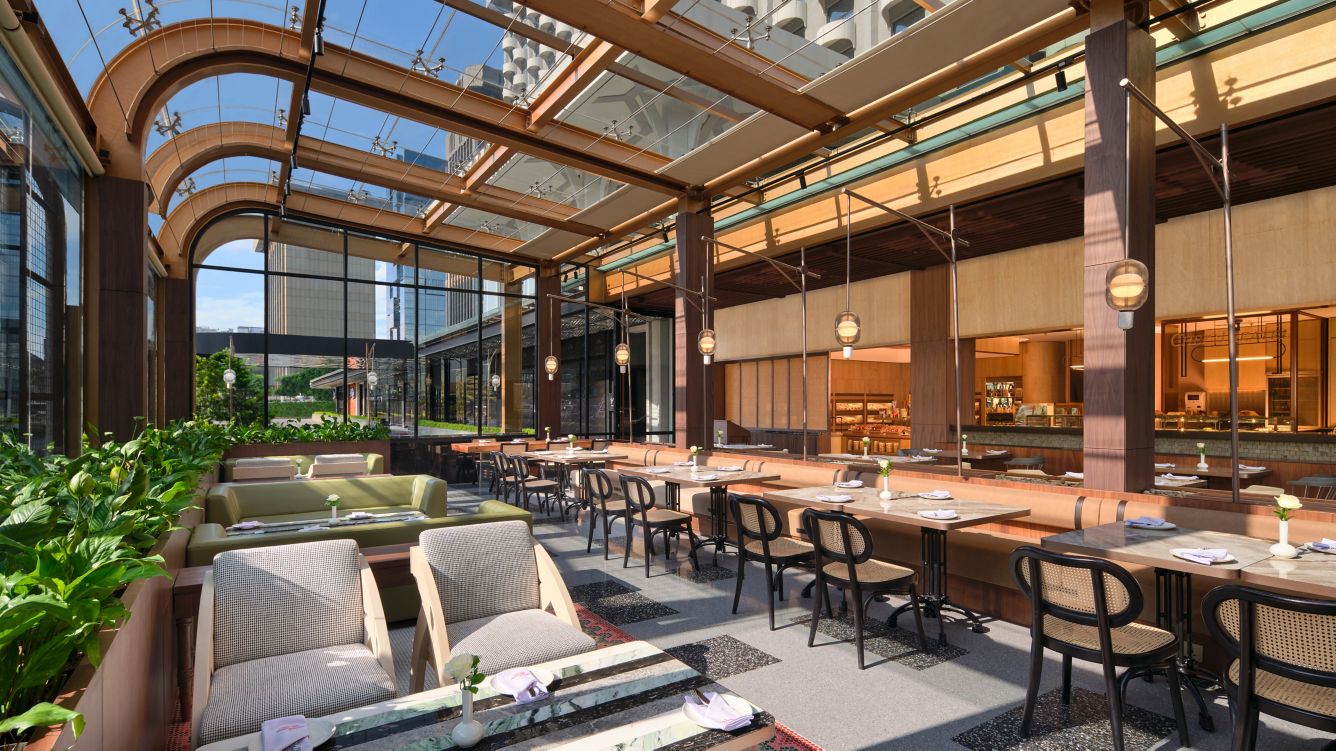
The primary error in assessing fiscal excellence is aggregating all dining costs into a single, monolithic category. In reality, dining programs face distinct classes of leakage. These include procurement issues, operational waste, and structural design flaws. Mastering how to reduce resort hotels dining expenses requires understanding that these categories often compound. For example, an unreliable local supply chain can force a resort to carry excessive, perishable inventory. Consequently, this collapses the operation’s waste-management capacity.
Oversimplification is rampant in this space. Many believe that simply trimming the menu will solve fiscal instability. However, offering fewer items does not reduce the cost of keeping inventory stable. Furthermore, it does not reduce the labor required for preparation.
To understand the true landscape, managers must look past the menu to the backend logistics. A resort complex that internalizes procurement performs better. Specifically, those that use long-term, direct-to-producer contracts manage costs effectively. Conversely, properties that rely on high-margin, intermediary distributors face greater volatility.
Deep Contextual Background: The Evolution of Resort Dining
Historically, resorts functioned as self-sufficient entities. Managers held sole authority over food safety, sourcing, and storage. Later, the post-war era transformed these programs into standardized, high-throughput models. These models relied heavily on national supply chains. Initially, this evolution created an illusion of permanent efficiency. Centralized purchasing power was expected to offset high shipping and labor costs.
Currently, resort scales have outpaced the capabilities of many local logistics networks. Providing consistent quality at competitive prices has become difficult. Therefore, the burden of procurement has returned entirely to the operator. The most successful dining programs have re-internalized their supply chains. They invest in onsite gardening, cold-chain independence, and automated inventory-forecasting. Ultimately, the most effective strategy for reducing expenses involves adapting to this re-internalization requirement.
Conceptual Frameworks and Mental Models
-
Inventory Turnover: You must calculate the speed at which perishable inventory converts to revenue. High-turnover environments hold a clear efficiency advantage.
-
Logistics Isolation: Evaluate the property’s reliance on third-party transport. High-cost properties rely on “just-in-time” deliveries, which remain vulnerable to infrastructure failure.
-
Waste-to-Value Cycles: Identify systems that recycle food waste. Composting or biogas production reduces garbage-removal costs while creating onsite inputs.
-
Labor-Intensity Assessment: Determine the proportion of costs driven by complex, scratch-prepared items. Compare these to scalable, high-efficiency preparation methods.
Categorizing Operational Architectures
| Architecture Type | Primary Fiscal Driver | Operational Constraint |
| In-House Agrarian | Low sourcing cost | High labor requirements |
| Standardized Hub | High purchasing scale | Logistics dependency |
| Selective Artisan | High-margin value | Low throughput |
| Automated Batch | Low labor cost | High capital expenditure |
Decision Logic: If your core goal is maintaining quality while reducing costs, the In-House Agrarian model is superior. It provides a robust long-term fiscal buffer against global price fluctuations. When evaluating how to reduce resort hotels dining expenses, categorize the property by these models. Do not assume that simple menu cuts will fix systemic issues.
Detailed Real-World Scenarios
Scenario: The Supply Chain Trap
A property relies on a single distributor for protein sourcing. Suddenly, a local transport strike occurs. The resort is left without inventory. Consequently, they must purchase at massive markups from retail providers. To avoid this, audit the supply-chain map for every critical input. Furthermore, demand multi-source contracts to build redundancy.
Scenario: The Waste Management Success
A resort implements a granular food-waste tracking system. They monitor plate-waste by specific menu item. As a result, they achieve an 18% reduction in purchasing volumes within one quarter. This success proves that data-driven inventory management is superior to projected demand models.
Planning, Cost, and Resource Dynamics
| Resource Type | Management Strategy | Variability |
| Procurement Forecasting | Data-linked agreements | Low |
| Waste-Reduction Incentives | Staff performance bonuses | Moderate |
| Infrastructure Investment | Multi-year capital planning | Moderate |
Strategic Insight: Reducing expenses is rarely about simple penny-pinching. Instead, recognize that stability is a high-cost component of the hospitality product. Properties that underinvest in their procurement infrastructure often suffer in the long run. They gamble on the stability of global supply chains, which is a dangerous financial strategy.
Tools, Strategies, and Support Systems
-
Direct-Sourcing Platforms: Bypass large-scale distributors. Instead, contract directly with local agricultural producers.
-
Automated Inventory Analytics: Use IoT-enabled scales and refrigeration sensors. This tracks food movement and spoilage in real-time.
-
Cross-Training Labor: Use staff across multiple dining outlets. This manages variable-demand cycles without needing a permanent, full-time staff for every single station.
-
Menu Engineering Software: Use data-driven software to calculate the profit margin of every item. Then, redesign or eliminate low-margin, high-waste dishes.
Risk Landscape and Failure Modes
The primary risk in modern resort dining is logistical fragility. As international shipping and labor costs rise, many properties get trapped. They require higher revenue to cover increasing operational costs. Consequently, they enter a cycle of decline.
The taxonomy of risk includes supply-chain dependence. In this scenario, a property is essentially a hostage to its lowest-quality vendor. Furthermore, there is a risk of quality-degradation feedback. Here, cost-cutting leads to guest dissatisfaction. Eventually, this results in lower occupancy and higher fixed-cost burdens.
Governance and Long-Term Adaptation
Treat your relationship with a resort dining program as a high-stakes, iterative contract.
-
The Audit Cycle: Review the management company’s procurement plan every two years. Specifically, check for funded projects focused on long-term supply-chain resilience.
-
The Adaptation Trigger: If an audit reveals that dining costs are rising faster than revenue, treat this as a structural failure. Do not mistake it for a temporary operational blip.
-
The Layered Checklist: Maintain a document tracking core sustainability metrics. Include waste percentage, local-sourcing percentage, and average plate cost to build an objective record of viability.
Measurement, Tracking, and Evaluation
-
Leading Indicators: Assess the management’s response to complex long-term procurement questions. Additionally, verify the quality of their public documentation regarding waste-reduction metrics.
-
Lagging Indicators: Monitor the frequency of supply-chain disruptions. Also, track the historical trend in food cost as a percentage of total revenue.
-
Qualitative Signal: Do employees speak about resource stewardship as a necessity? Or is their focus restricted solely to service-performance metrics?
Common Misconceptions and Oversimplifications
-
Lowering ingredient prices is the only solution. This is false. Success requires managing the entire chain, from sourcing to spoilage reduction.
-
High-volume purchasing is always cheaper. This is a myth. If high volume leads to high spoilage, the real cost is significantly higher.
-
Guests demand an expansive, 50-item menu. In reality, most guests prefer consistency, quality, and locally relevant items.
-
Automated ordering is a “set it and forget it” solution. It requires constant, data-driven calibration to account for seasonal shifts.
-
The chef is the primary expert on cost-reduction. In fact, the executive team and procurement specialists hold the real keys to fiscal stability.
-
Outsourcing dining is a low-risk strategy. Conversely, it is a major driver of operational risk. Rarely will you find this approach in professional guides on how to reduce resort hotels dining expenses.
Conclusion
Understanding how to reduce resort hotels dining expenses requires a fundamental shift in perspective. Move from passive, menu-based thinking to active, institutional-grade auditing. By prioritizing programs that demonstrate clear commitments to supply-chain stewardship, operators secure certainty.
The most resilient properties function as independent, enterprise-grade logistical systems. They sustain their own food ecosystems despite global commodity stress. Fiscal stability is not a matter of chance. Instead, it is a product of rigorous procurement, architectural, and operational engineering.