The transformation of American mountain towns from seasonal outposts into year-round, high-density hubs of recreation and commerce represents one of the most significant shifts in the domestic leisure economy. This evolution has moved well beyond the mere mechanics of lift operation, evolving into a sophisticated, interconnected ecosystem where the “ski” experience is often secondary to the broader lifestyle, wellness, and aesthetic appeal of the mountain environment. For the modern stakeholder, understanding this transition requires a departure from traditional tourism metrics toward a more granular analysis of operational maturity and socioeconomic resilience.
The modern ski resort is no longer a self-contained entity; it is a node within a larger, vertically integrated corporate network—or, in rarer cases, a highly localized, independent powerhouse. These destinations must now contend with the dual pressures of climate variability and the demand for constant connectivity, high-end comfort, and “four-season” relevance. This analysis serves as an authoritative framework for those looking to navigate, evaluate, or invest in these environments, stripping away the marketing artifice to reveal the underlying mechanisms that determine true long-term value.
Understanding “modern ski lifestyle destinations usa”
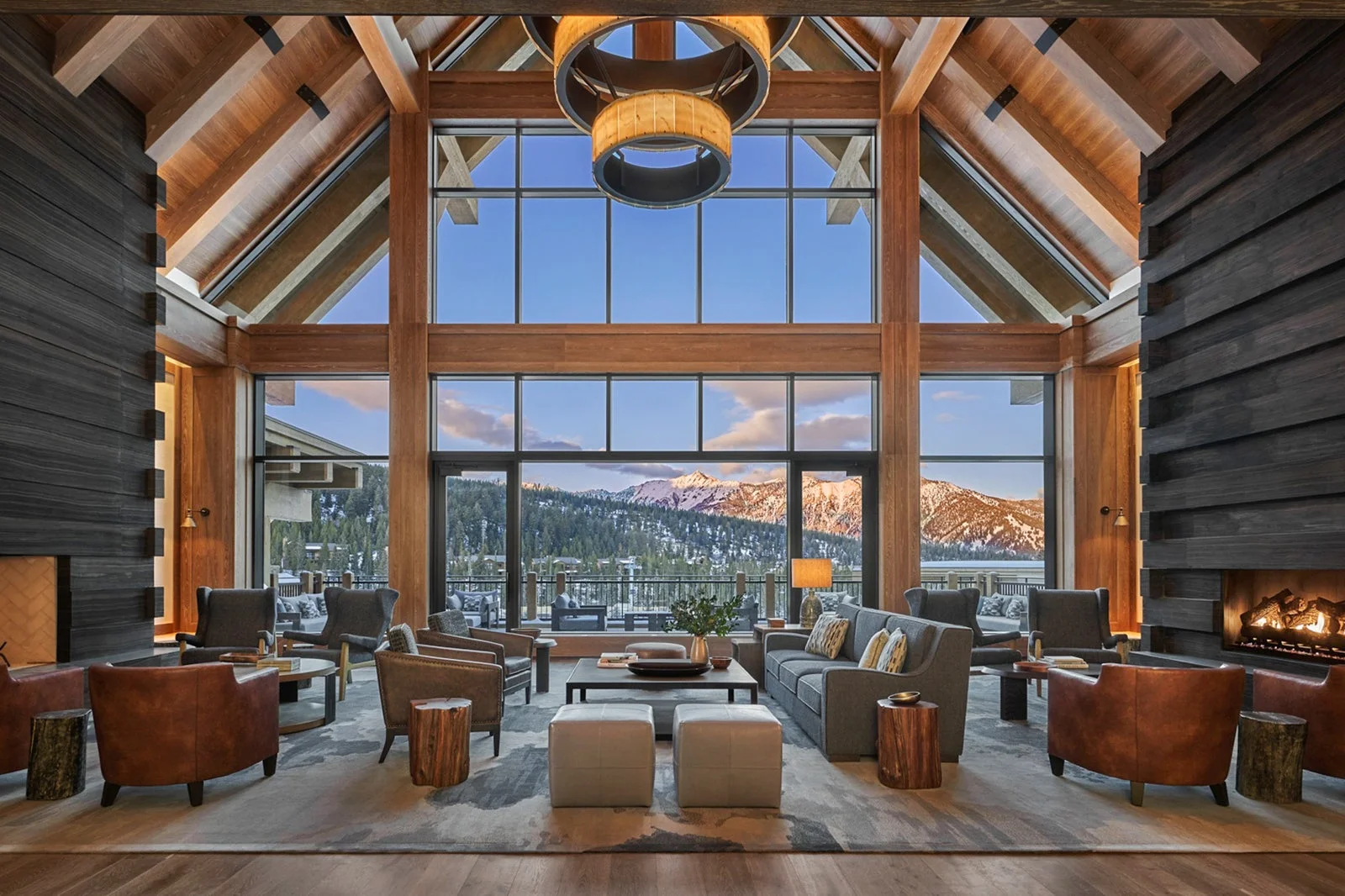
To identify the modern ski lifestyle destinations usa that offer genuine value, one must first dismantle the misconception that prestige is synonymous with quality. A common failure in destination evaluation is the reliance on “brand reputation,” where the largest resorts are assumed to be the most viable. In reality, the best destinations—those capable of sustaining year-round interest and high-end demand—are often those that balance their corporate-driven infrastructure with a distinct, locally-nurtured culture.
Oversimplification often manifests in a singular focus on the “ski terrain” as the primary driver of value. While critical, the modern destination is measured by its “connectivity density”—the ease with which one can navigate from the slopes to wellness facilities, high-end retail, and reliable professional-grade workspace. The modern ski lifestyle destinations usa that thrive are those that successfully convert a “winter-only” customer base into a “four-season” population. This shift requires immense capital investment in infrastructure, from snowmaking reliability to the development of world-class summer recreation (e.g., mountain biking, trail networks, cultural events). When assessing these areas, prioritize those that demonstrate clear, multi-decade capital improvement plans over those that merely highlight their past achievements.
The Systemic Evolution of the American Mountain Town
The American ski resort has transitioned through three distinct phases. The first was the “rugged pioneer” era, defined by localized, family-run operations where the skiing was the only product. The second was the “resort expansion” era of the late 20th century, which saw the birth of the massive, consolidated lift-linked systems and the professionalization of hospitality. We are currently in the “ecosystem integration” era, where the ski resort serves as the anchor for a year-round economy.
This evolution is fundamentally a response to economic risk. By diversifying into wellness, real estate, and event hosting, resorts have insulated themselves from the extreme volatility of snowfall. This has turned the modern mountain town into a complex, high-pressure asset class, where the lines between residential, commercial, and recreational spaces have effectively blurred into a singular, managed product.
Conceptual Frameworks and Mental Models
To evaluate these destinations with professional rigor, utilize the following frameworks:
-
The Four-Season Utilization Metric: Does the destination maintain 60%+ of its peak-winter retail and service activity during the shoulder seasons? A resort that “shuts down” is an operational liability.
-
The Infrastructure-to-Amenities Ratio: A resort with 50,000 acres of terrain but poor local transport, housing, or digital connectivity is a destination with high “friction.” Focus on locations that prioritize seamless throughput.
-
The Operational Elasticity Model: How does the destination handle peak demand? Does it degrade into a “congested bottleneck,” or does it utilize sophisticated capacity management (e.g., timed-entry, off-peak pricing) to maintain the user experience?
Categorization and Operational Trade-offs
| Category | Primary Focus | Trade-off |
| Corporate-Managed Hubs | Efficiency, high capacity | Homogenized service, high cost |
| Boutique Mountain Towns | Cultural identity, exclusivity | Limited scalability, higher barrier to entry |
| Four-Season Powerhouses | Year-round activity, stability | Lower “wild” factor, higher density |
| Developing Frontier Resorts | Growth potential, lower cost | Infrastructure risk, high volatility |
Decision Logic and Real-World Scenarios
-
The “Convenience vs. Cost” Dilemma: A visitor selects a “ski-in/ski-out” property for convenience but finds the town center inaccessible without private transport. The error is failing to account for “destination layout.”
-
The “Summer Stagnation” Trap: An investor buys property in a resort expecting year-round returns, only to find the summer infrastructure is insufficient to drive traffic. Always audit the local summer event calendar before committing to a long-term asset.
-
The “Snow-Certainty” Variance: A destination with high-altitude, tech-augmented snowmaking will almost always outperform a mid-altitude resort in terms of property value appreciation. This is the single most important variable in long-term “modern ski lifestyle destinations usa” stability.
Planning, Cost, and Resource Dynamics
Economic dynamics are driven by the “scarcity premium” of prime mountain real estate.
-
Direct Costs: Lift access, lodging premium, retail overhead.
-
Opportunity Cost: The cost of choosing a “convenient” destination over one that offers more authentic, yet logistically complex, engagement.
-
Investment Range Table:
-
Developing/Frontier: $600–$900/sq ft (high risk/growth).
-
Established/Four-Season: $1,200–$2,500/sq ft (stability/lower yield).
-
Ultra-Luxury/Exclusive: $3,000+/sq ft (asset preservation/prestige).
-
Risk Landscape and Systemic Failure Modes
The primary systemic risk is “Climate-Driven Obsolescence.” Destinations that do not aggressively reinvest in water-efficient, high-efficiency snowmaking systems will find themselves obsolete by 2040. A secondary risk is “Labor Liquidity”—as mountain towns become prohibitively expensive, the service infrastructure (the people who actually run the town) collapses. The modern ski lifestyle destinations usa that are truly “authoritative” are those that prioritize integrated workforce housing as part of their long-term development strategy.
Governance, Maintenance, and Long-Term Adaptation
The best destinations treat their governance like a public utility. They establish multi-year planning commissions that balance the need for rapid revenue growth with the necessity of environmental preservation. A hallmark of a mature destination is the presence of an active “community-resort council” that includes stakeholders from both the private sector and the local resident population. When auditing a destination, look for the presence of these oversight bodies; their existence is the strongest indicator of a town that will survive the next decade of structural change.
Measurement, Tracking, and Evaluation
-
Leading Indicators: The volume and frequency of major capital expenditures (lifts, snowmaking, base-area redevelopments).
-
Qualitative Signals: The quality of the “local media” or town forum discussions; if the local discourse is focused on managing growth, it is a healthy sign.
-
Documentation Example: Maintain a “Destination Vitality Tracker” for potential investments, recording metrics like average lift-line wait times, lodging occupancy rates in shoulder seasons, and year-over-year growth in summer event attendance.
Common Misconceptions and Oversimplifications
-
Myth: “Luxury is the highest form of quality.” Correction: True quality in a mountain town is found in accessibility, efficiency, and logistical flow—opulence is secondary.
-
Myth: “The season ends in April.” Correction: The modern ski lifestyle destinations usa that provide the best long-term value are those that do not “end” at all, maintaining high-activity levels through all four seasons.
-
Myth: “Everything is negotiable.” Correction: In high-demand mountain markets, the asset value is increasingly “locked in” by the scarcity of developable land and restrictive zoning regulations.
Conclusion
Identifying the premier modern ski lifestyle destinations usa is a process of filtering out the noise of marketing to focus on the cold, hard realities of infrastructure, labor, and climate adaptability. By shifting the lens from the “ski trip” to the “managed ecosystem,” one can distinguish between a destination that is merely surviving on past glory and one that is architecting its future as a resilient, year-round hub.