The execution of large-scale gatherings within a resort environment represents one of the most complex logistical challenges in the hospitality sector. When an organization or a private party transitions from a standard transient stay to the hosting of a coordinated event, the operational requirements expand exponentially. A resort is fundamentally a managed space; introducing a high-density, high-demand event into that space requires a shift from passive hospitality to active, project-managed infrastructure.
Understanding the success metrics for such ventures necessitates a departure from standard venue selection practices. The objective is not merely to secure a room count or a ballroom; it is to assess the resort’s ability to maintain its foundational service standards while absorbing the structural strain of a multi-day event. This analysis dissects the intricacies of planning, execution, and risk mitigation, providing a definitive reference for those tasked with orchestrating complex events in non-traditional, destination-heavy settings.
Understanding “resort hotels event plans”
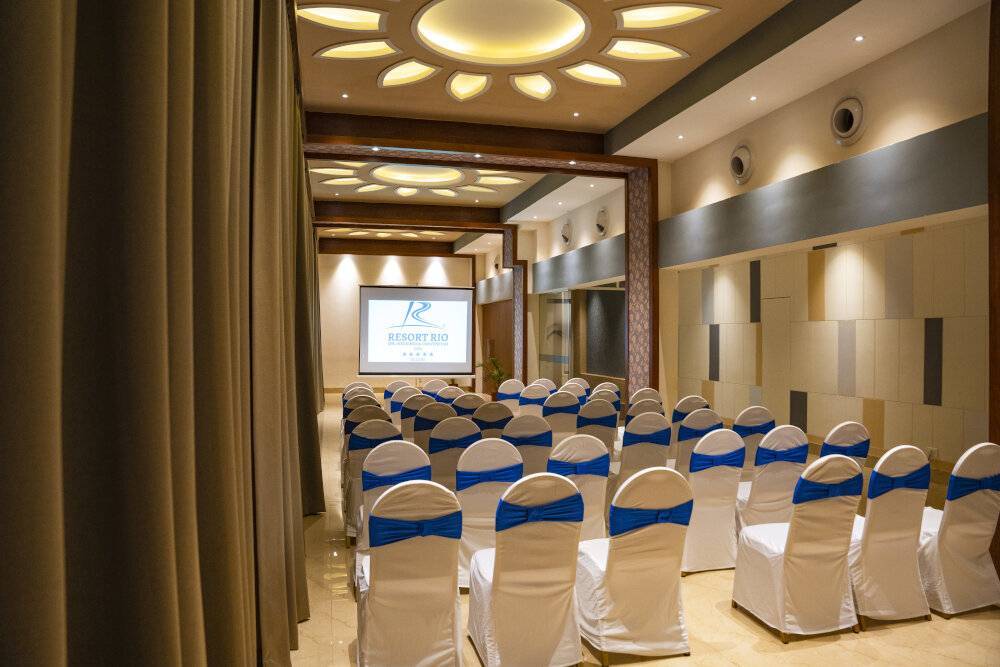
The categorization of resort hotels event plans is frequently subject to confusion between “resort-managed programming” and “client-hosted events.” A property may have an extensive calendar of daily activities, but this internal infrastructure does not always translate into the specialized capability required to host an external, bespoke event. A critical oversight by many planners is the assumption that the resort’s existing hospitality team can seamlessly shift into a dedicated event-planning role without a detailed, contractual integration of services.
The danger of oversimplification lies in the conflation of “scenery” with “functionality.” A destination resort may offer an unrivaled aesthetic, but if the facility lacks the robust power, bandwidth, or load-bearing logistics for a specific type of event, the aesthetic will quickly become a liability. When evaluating resort hotels event plans, one must prioritize operational resilience. The success of an event hinges not on the view from the venue, but on the invisible infrastructure—the back-of-house logistics—that ensures the event stays on schedule and within budget, regardless of environmental variability or property density.
Deep Contextual Background: The Evolution of Destination Gatherings
Historically, destination events were the preserve of corporate retreats and intimate family gatherings, often held in established, utilitarian conference centers. The shift toward modern luxury resorts as primary event venues reflects a broader cultural desire for “integrated leisure.” In the mid-20th century, the luxury hotel was a waypoint for commerce; today, the resort is a destination in its own right, functioning as a holistic hub for both professional networking and personal restoration.
This transformation has required resorts to drastically expand their technical and organizational footprints. The professionalization of the “event director” role within these properties is a direct consequence of this shift. As clients demanded higher levels of sophistication, resorts moved away from flexible, ad-hoc event models and toward highly rigid, contractually defined architectures. This evolution has increased the predictability of these events, but it has also introduced a layer of transactional rigidity that planners must navigate with caution.
Conceptual Frameworks and Mental Models
To evaluate the feasibility of your event, apply these evaluative lenses:
-
The Operational Elasticity Metric: This measures how much the resort can scale its services to accommodate a surge in demand during an event. Does the property have a dedicated event team, or does it reallocate staff from standard hospitality roles?
-
The Infrastructure Integration Model: This framework plots the technical requirements (AV, high-speed networking, power density) against the physical limitations of the venue. A high-scoring property will have these systems baked into the architecture, rather than relying on expensive, imported solutions.
-
The Service-to-Intensity Ratio: Events introduce a high density of simultaneous demands. Does the property’s current staffing model account for the “event-related friction,” or will the general guest experience suffer as a result?
Categorization and Operational Trade-offs
| Event Archetype | Primary Resource Focus | Operational Trade-off |
| All-Inclusive Retreats | Logistical simplicity, low friction | Restricted vendor/supplier flexibility |
| Boutique Estate Buyouts | High privacy, bespoke service | High cost; limited internal staff depth |
| Grand Luxury Hubs | Scalability, technical excellence | Higher density, potential for outside noise |
| Wilderness/Nature Lodges | Unique environment, high impact | Extreme sensitivity to weather; logistically dense |
The decision logic here is driven by the “risk tolerance” of the client. If technical excellence is non-negotiable, the Grand Luxury Hub is the only viable choice among established resort hotels event plans. If the goal is community and privacy, the Boutique Estate Buyout provides the necessary environment, albeit with higher logistical complexity.
Detailed Real-World Scenarios
-
The Seasonal Infrastructure Risk: A planner selects a beachfront resort for an off-season corporate event. However, the property reduces its facilities maintenance staff during the off-season, leading to slow technical repairs during the event. The solution is to ensure the contract explicitly mandates a “full-service operational baseline.”
-
The Bandwidth Bottleneck: An event requiring high-speed data transmission for remote demonstrations takes place at a resort that relies on a single, shared local network. The second-order effect is a system failure at the most critical point of the event. Success requires an independent network verification and potential satellite redundancy.
-
The Noise Interference Conflict: A high-level strategy retreat is held at a property that simultaneously hosts large, high-energy wedding parties. The failure mode is “acoustic leakage.” Strategic event placement requires selecting venues with dedicated, noise-isolated event zones.
Planning, Cost, and Resource Dynamics
The economic profile of these ventures is rarely linear. Costs often compound due to the “isolated logistics” of the destination.
-
Direct Costs: Facility rental, catering, service charges, and dedicated labor.
-
Indirect Costs: The “logistical tax” of transporting specialized equipment, staff, or technical components to a remote location.
-
Variable Cost Ranges:
-
Baseline (Standard Conference/Group): $250–$600 per attendee.
-
Mid-Tier (Executive Retreat/Bespoke): $800–$2,000 per attendee.
-
Premium (Estate Buyout/Ultra-Exclusive): $3,500+ per attendee.
-
Risk Landscape and Failure Modes
The primary failure mode is the “Single Point of Failure” in the resort’s operational team. If the event is managed by a single contact person, and that person experiences a scheduling conflict or departure, the entire event plan can collapse. Compounding this is the “lack of visibility”—events often suffer when the planner relies solely on the resort’s internal communications without maintaining an independent, real-time feedback loop with the staff on the ground.
Governance, Maintenance, and Long-Term Adaptation
Effective governance requires the establishment of a “Pre-Event Operational Baseline.” This is a documented, agreed-upon standard for how the resort will operate during the event, covering everything from network uptime to staff response times. Regular review cycles during the event—at minimum twice daily—are essential to ensure the resort’s performance remains aligned with the event plan. If discrepancies emerge, the governance structure must allow for immediate corrective action.
Measurement, Tracking, and Evaluation
-
Leading Indicators: The speed and accuracy of the resort’s response to your “Request for Proposal” (RFP) technical specs.
-
Qualitative Signals: The level of autonomy granted to the event director. If the property’s hierarchy requires executive approval for minor event-day decisions, it is a sign of operational rigidity.
-
Documentation Example: Maintain a “Service Quality Audit” throughout the event, quantifying metrics like “time-to-repair” for technical issues or “staff arrival consistency” for scheduled sessions.
Common Misconceptions and Oversimplifications
-
Myth: “Everything is included in the package.” Correction: Packages are designed to cover standard experiences; specific, bespoke event needs will always trigger supplemental charges.
-
Myth: “The resort is the event expert.” Correction: The resort is a venue expert. The client must be the event expert.
-
Myth: “Standard staffing levels apply during events.” Correction: Events require dedicated personnel. Never assume that the resort’s daily staffing is sufficient for high-intensity gathering requirements.
Conclusion
The orchestration of professional and private events within the resort landscape requires a departure from standard planning methodologies. It demands a rigorous, analytical approach to logistical integration, where one treats the property not as a passive setting, but as a dynamic participant in the event’s success. By prioritizing operational resilience, transparent governance, and independent verification of infrastructure, planners can mitigate the inherent risks of destination hospitality. Ultimately, successful event management in this context is a matter of foresight, clearly defined contractual expectations, and the willingness to treat the resort as an extension of one’s own operational team.