The contemporary all-inclusive resort model is often reduced in marketing discourse to a promise of convenience: a single, comprehensive price point meant to eliminate the friction of daily financial transactions. Yet, for the discerning traveler, this convenience frequently conceals a complex, managed ecosystem with significant trade-offs in experiential quality, operational control, and genuine cultural engagement. The true value of a stay is not defined by the sheer volume of included services, but by the strategic alignment of the property’s management philosophy with the guest’s personal objectives.
Achieving a high-value outcome requires a move away from passive consumption toward a more evaluative, project-managed approach. It necessitates an understanding that these properties operate on precise margin calculations, where the quality of the “included” experience is frequently a reflection of the resort’s need to balance guest satisfaction with strict cost-containment protocols. This analysis serves as an authoritative guide for those who recognize that the most effective way to navigate the all-inclusive market is to approach it with the rigor of an informed stakeholder rather than a passive recipient of services.
Understanding “top resort hotels all inclusive plans”
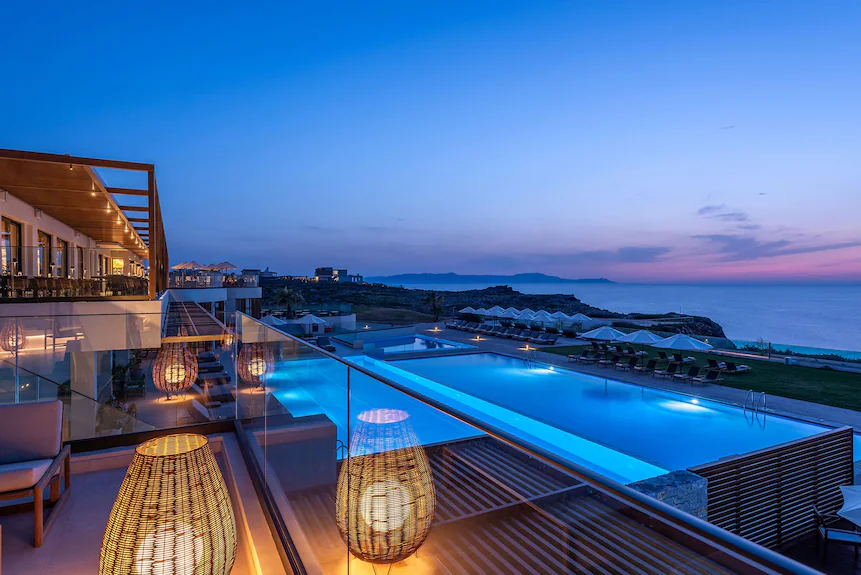
The effort to identify top resort hotels all inclusive plans is hampered by the industry’s pervasive use of “tier-based” branding, which conflates property size with quality. A common mistake is to assume that the largest, most visible chains represent the gold standard. In reality, the best all-inclusive programs are often those that operate with a higher degree of intentionality, focusing on the quality of ingredient sourcing, the ratio of staff to guests, and the genuine integration of local environmental assets.
Oversimplification in this space often manifests as a singular focus on the “inclusion list.” A guest might be lured by a package that includes a dozen dining venues, ignoring the reality that such a volume often necessitates central kitchens, mass-production techniques, and an reliance on pre-processed commodities. True value is found in exclusivity and craft. When you evaluate the top resort hotels all inclusive plans, you must look for “limitation as a feature”—properties that intentionally cap guest density and focus on bespoke service delivery rather than the breadth of their catalog. This shift in perspective allows the traveler to prioritize quality over the illusory benefit of unchecked volume.
Deep Contextual Background: The Evolution of Institutionalized Hospitality
The all-inclusive model originated as a response to the need for simplified commerce in remote or underdeveloped tourism markets. In the mid-20th century, these properties were essentially self-sufficient enclaves, providing all necessary sustenance and safety in regions where external infrastructure was lacking. This necessity eventually transformed into a business model of “financial capture,” where the primary goal became keeping the guest within the property’s perimeter to maximize internal revenue.
Over time, this model underwent a professionalization phase, fueled by the development of sophisticated hospitality management technologies. The modern all-inclusive resort is now a high-tech machine, utilizing advanced data analytics to predict guest behavior, inventory utilization, and labor requirements. This history is vital for the modern guest; it explains why these properties are inherently optimized for control and efficiency. The shift from an “infrastructure-driven” model to a “data-driven” one has changed the nature of the traveler’s risk. Today, the challenge is not navigating a lack of resources, but navigating an over-abundance of standardized, often mediocre, options.
Conceptual Frameworks and Mental Models
To evaluate your potential destinations with professional rigor, utilize the following analytical frameworks:
-
The Margin-Quality Inversion: Recognize that the most heavily marketed “all-inclusive” perks are often the highest-margin items for the resort, not the highest-value items for the guest. Prioritize programs that offer intangible value, such as access to protected natural areas or authentic, locally sourced experiences.
-
The Density-Service Equilibrium: Every resort has a breaking point. As guest density increases, the personal attention that defines a luxury stay inevitably decreases. Look for properties with a low “Room-to-Acreage” ratio.
-
The Transparency Metric: Evaluate the resort’s willingness to provide granular detail about their inclusions. A property that obscures its offerings in vague “resort credit” language is one that prioritizes obfuscation over value.
Categorization and Operational Trade-offs
| Category | Typical Service Focus | Primary Limitation |
| High-Volume Mass Market | Broad service breadth | Low culinary and experiential depth |
| Boutique Luxury All-Inclusive | Bespoke service and quality | Higher cost, lower service volume |
| Environmental/Eco-Luxury | Nature-integrated, immersive | Infrastructure and connectivity limits |
| Corporate-Managed Lifestyle | Brand consistency, efficiency | Homogenization, lack of local character |
The decision logic should follow the “Purpose-Driven Stay” rule. If the goal is seamless, predictable infrastructure, the Corporate-Managed Lifestyle property is the rational choice. If the objective is deep, restorative quality, the Boutique Luxury All-Inclusive model is required.
Detailed Real-World Scenarios
-
The “Mass-Produced Dining” Disappointment: A guest selects a high-profile resort expecting a unique culinary experience, but finds that all dining outlets are supplied by a singular central kitchen. The failure mode here is a lack of research into the resort’s operational structure.
-
The “Exclusion by Inclusion” Failure: A property offers many included activities but maintains low-quality, over-crowded equipment. The guest is left with the idea of an activity but not the quality. Effective planners verify the maintenance status of equipment prior to booking.
-
The “Hidden Fee” Contradiction: A property claims to be “all-inclusive” but utilizes a tiered pricing system for premium experiences or specific alcohol brands. This “bait-and-switch” model is a warning sign of poor governance.
Planning, Cost, and Resource Dynamics
The economic profile of these stays is often distorted by the lack of transparent, modular pricing.
-
Direct Costs: Room rate + base inclusion package.
-
Indirect Costs: The opportunity cost of not exploring independent, locally sourced dining or tourism opportunities.
-
Planning Range Table:
-
Baseline (Standard/High-Volume): $400–$700 per couple/night.
-
Mid-Tier (Boutique/Quality-Focused): $900–$1,600 per couple/night.
-
Premium (Ultra-Luxury/Exclusive): $2,500+ per couple/night.
-
Risk Landscape and Systemic Failure Modes
The primary systemic failure is the “Normalcy Bias,” where the guest ignores signs of operational neglect because they have already committed to the full price of the stay. Compounding this is the “seasonal service collapse,” where a property is highly effective during the off-season but fails to scale its services adequately during peak occupancy. Mitigation requires checking occupancy patterns—the best properties maintain service levels through rigorous, year-round management of their labor force.
Governance, Maintenance, and Long-Term Adaptation
To effectively utilize the top resort hotels all inclusive plans, view your stay as a managed project. Before arrival, initiate a “pre-stay engagement”—ask for current activity menus, specific dining requirements, and documented policies on inclusion. A property that responds with precision is one that is currently well-governed.
Measurement, Tracking, and Evaluation
-
Leading Indicators: The quality and transparency of the resort’s pre-arrival communication; if they are unable to provide clear details on inclusions, they are likely hiding service gaps.
-
Qualitative Signals: Reviews that mention “staff fatigue” or “standardized scripts”—these are clear signals of a property that is failing to manage its labor-to-guest ratio.
-
Documentation Example: Maintain an “Inclusion vs. Reality” log. During your stay, track how often you were required to pay for “premium” upgrades that were implied to be included. This data is essential for your future booking decisions.
Common Misconceptions and Oversimplifications
-
Myth: “All-inclusive means stress-free.” Correction: Planning an all-inclusive stay requires significant due diligence; failing to do so merely replaces the stress of daily spending with the stress of poor value.
-
Myth: “More restaurants equals better food.” Correction: Quality is a function of sourcing and preparation, not the quantity of outlets.
-
Myth: “Pricing is standardized.” Correction: Dynamic pricing is the standard; savvy guests understand that booking timing and channel usage significantly alter the value proposition.
Conclusion
Identifying the top resort hotels all inclusive plans is an exercise in discerning true value from marketing convenience. By adopting an analytical, stakeholder-based approach, the traveler can move past the limitations of standardized models and identify properties that provide genuine, high-quality experiences. The goal is to move from the role of a passive, paying consumer to that of an informed participant who utilizes the resort’s managed infrastructure to achieve a specific, high-standard result.